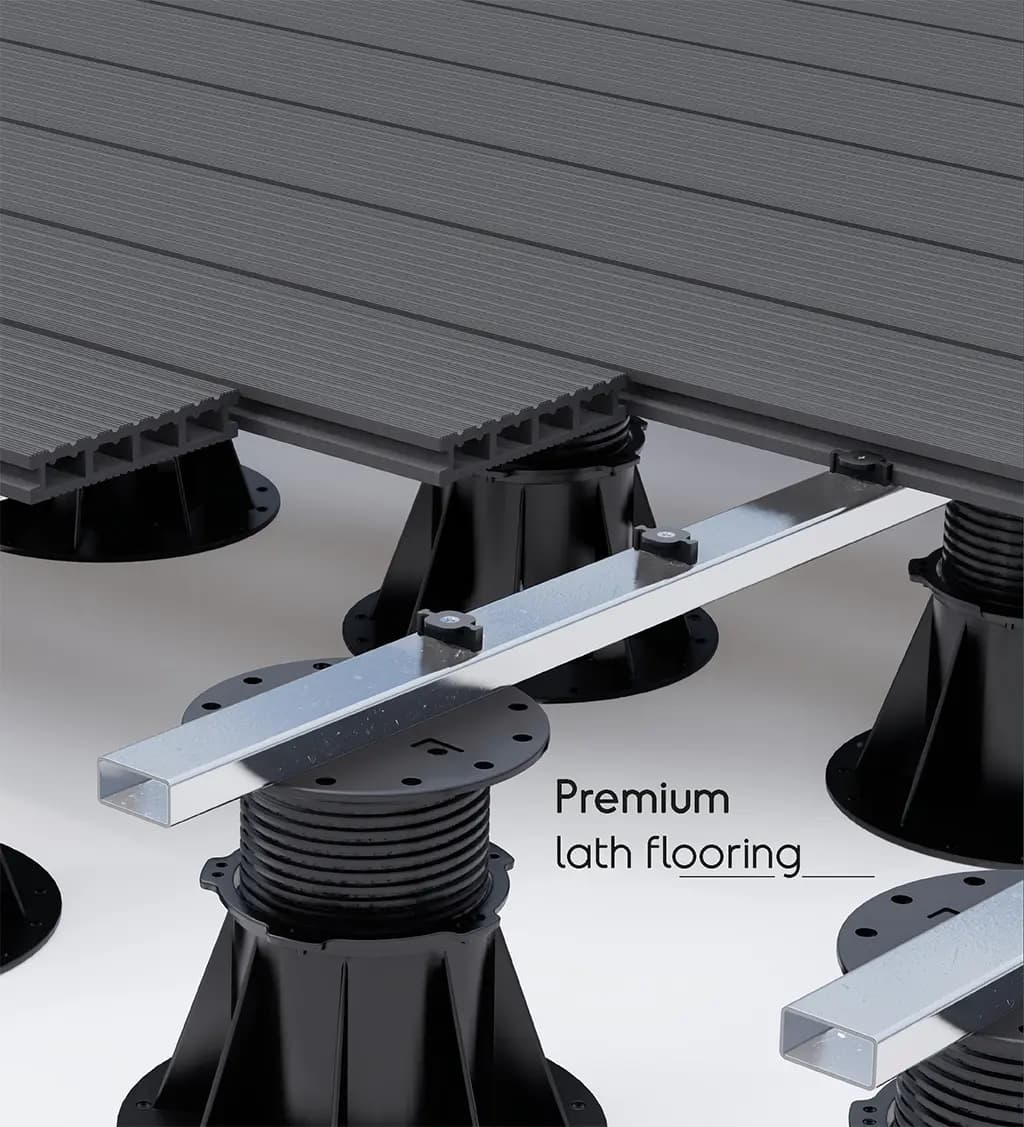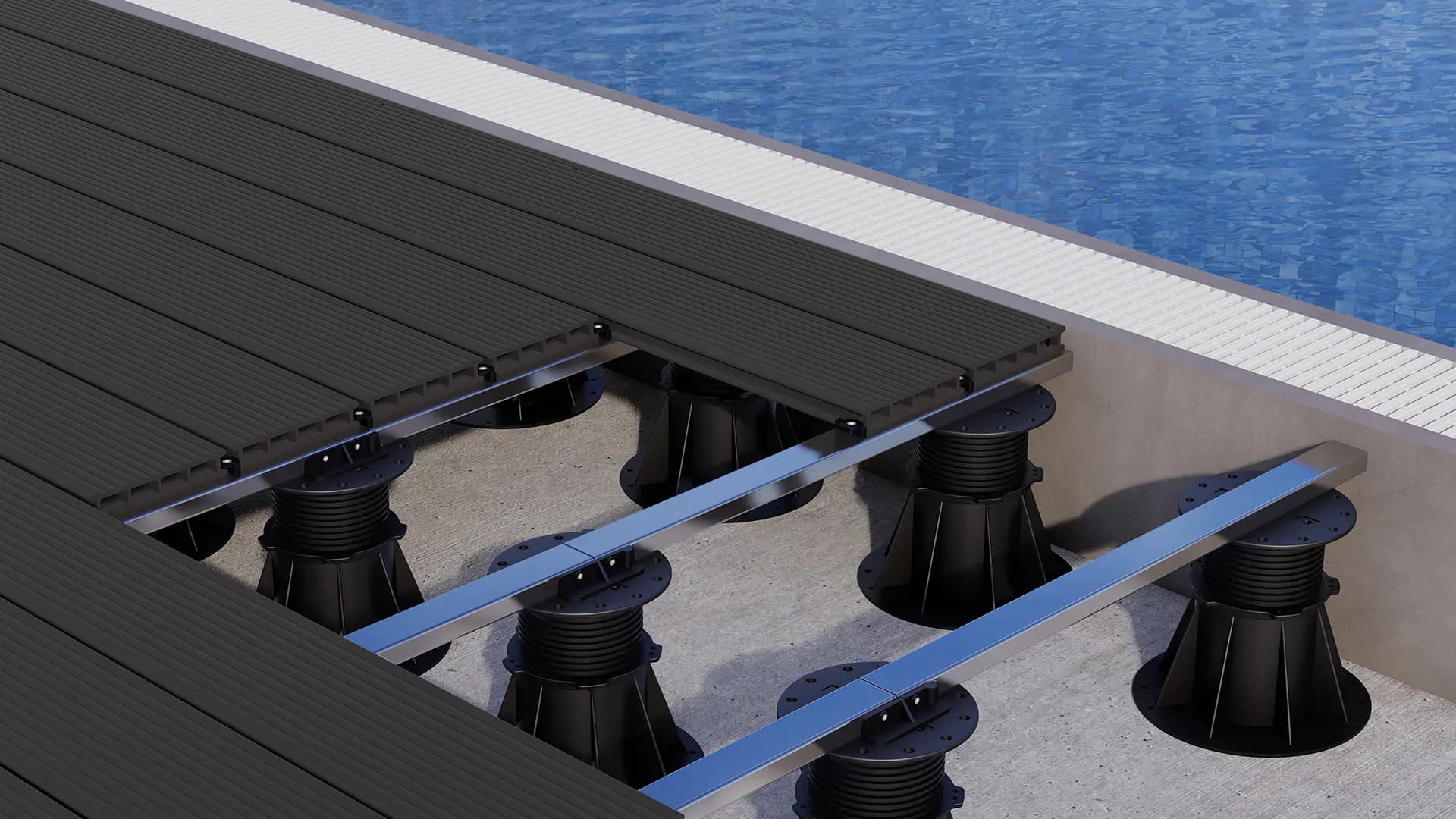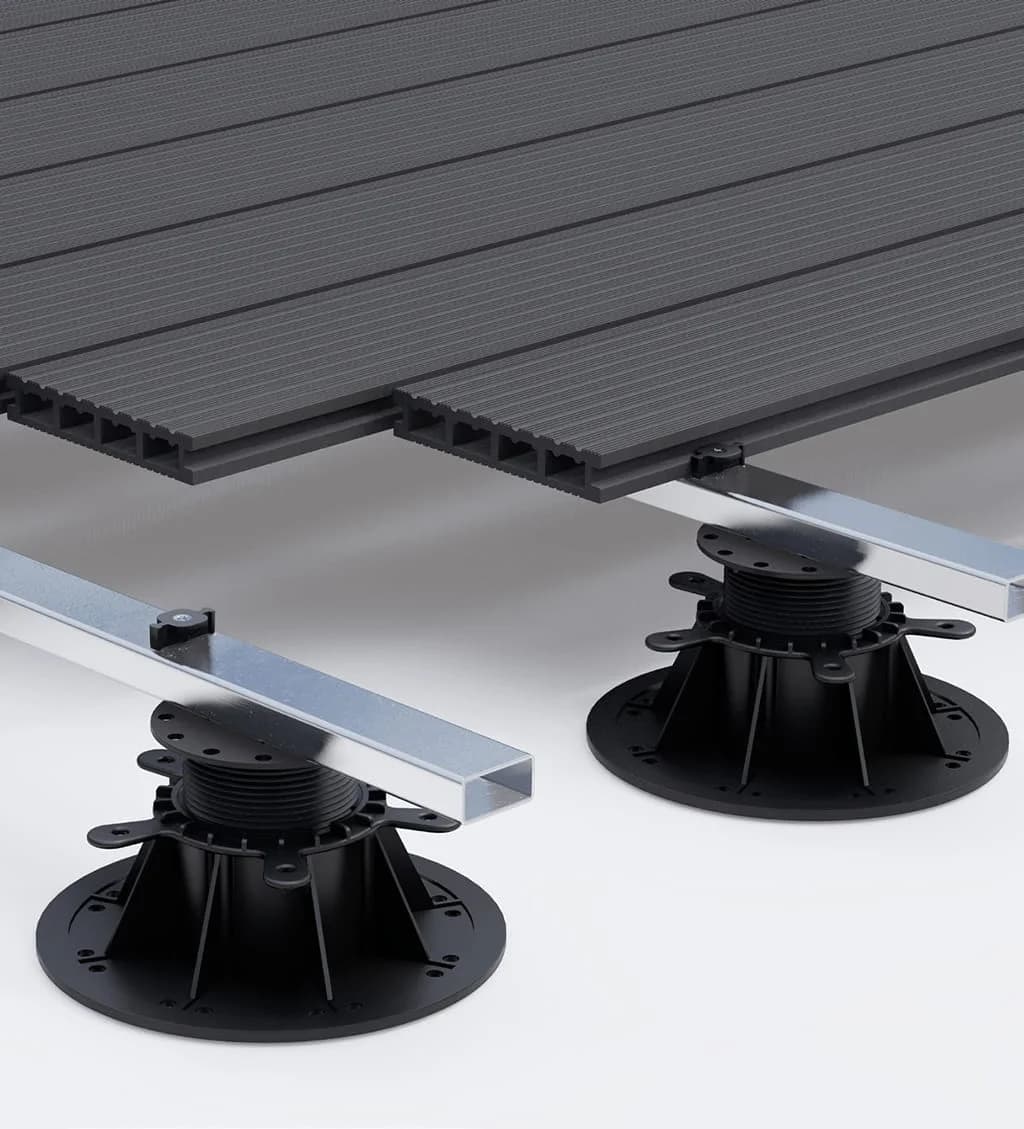
An adjustable pedestal is the sequence of the Tokoz Premium screw pressed in Çorlu. The head is turned, the finished height is read, and the safe-level button cuts the limit. T-L locks the head. A coupler is added only above 181 mm.
An adjustable pedestal reaches its height by turning one screw. The height is not built by stacking shims, wedges, offcuts or washers under the base. A stack changes the bearing each time a piece compresses, and the next pedestal in the row no longer meets the same plane. Tokoz puts the adjustment in the screw that already stands between the head and the base. That screw is turned. A layer is not added underneath and then called an adjustment. One screw is the only place to read. If two pieces under the base are both making the height, neither reading is the finished height. Shims also hide a module that arrived short. The longer module is a length chosen from the catalogue before the turn, not a pile made during the turn. This page follows the turn itself. It does not count every piece in the box. It does not discuss the recipe of a board, nor a wedge used to level a tile. Adding a layer under the base while the screw is in your hand splits the reading in two. A split reading is not the finished height. The finished height is the top of the head, and it stands at the end of the one screw.
The head is turned and the height is read
The turn is made at the head. The part the hand takes is the head. The screw under it grows or shortens as the head rotates. The turn stops when the finished height is the height the layout asked for. The finished height is the top of the head, where the finish will sit. It is read against the reference the job already set. That reference may be a door threshold, a railing, or a line that was pulled. The length of thread you can see is not the finished height. The height of the base is not the finished height either. Reading the thread and calling it the finished height leaves the head out of the number. The finish then lands high or low by the height of the head itself. Each pedestal is read on its own. A neighbour that looks the same can still need another turn, because the surface under it is not the same. The turn comes first. The reading confirms it. A reading taken before the turn is only the length the module left the box at. It is not the length that was asked for. A mark made without the line touching the top of the head measures the air, not the screw. The mark is held until the head meets that plane. If it does not meet, the turn is not finished.
The button cuts the screw at the limit
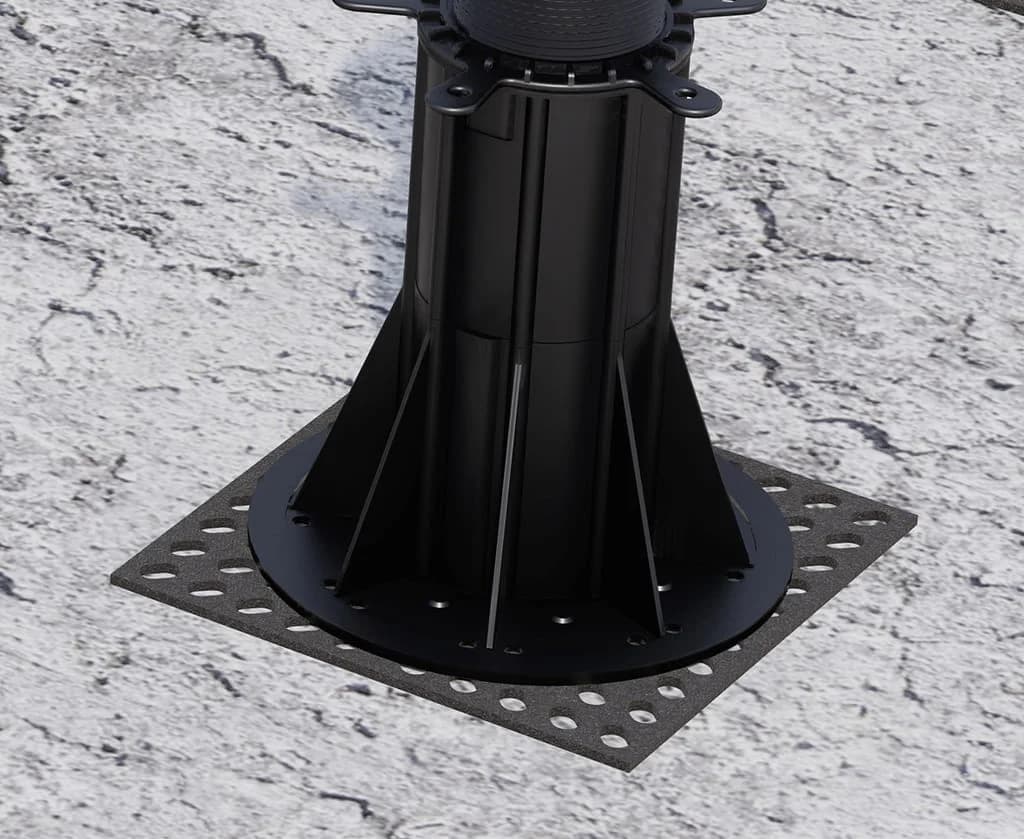
The safe-level button is the stop on that same screw. It ends the turn when the screw reaches the limit the body was made for. Past that limit the head, or a coupler if one is fitted, stands outside the declared range. The module is no longer the support that was declared. The button is not a mark you are free to pass. Forcing the head past it feels like one more turn toward the line, and it is the turn that leaves the declaration. Tokoz moulds the stop into the Premium body. The limit lives in the screw, not on a separate card. If the button is broken, the screw has no stop. The module is replaced before any height is accepted. A broken stop cannot be replaced by a careful hand. The hand is what the stop is there to limit. The screw is turned, it meets the button, and it stops. The finished height you need has to fall inside that stop. If the line you need sits beyond the button, the module is the wrong length and a longer one is chosen. The button is not defeated in order to stretch a short body. Filing the button down is the same defeat. A stop that arrives broken in the box does not go out to site without an adjustment limit.
T-L locks when the height is right
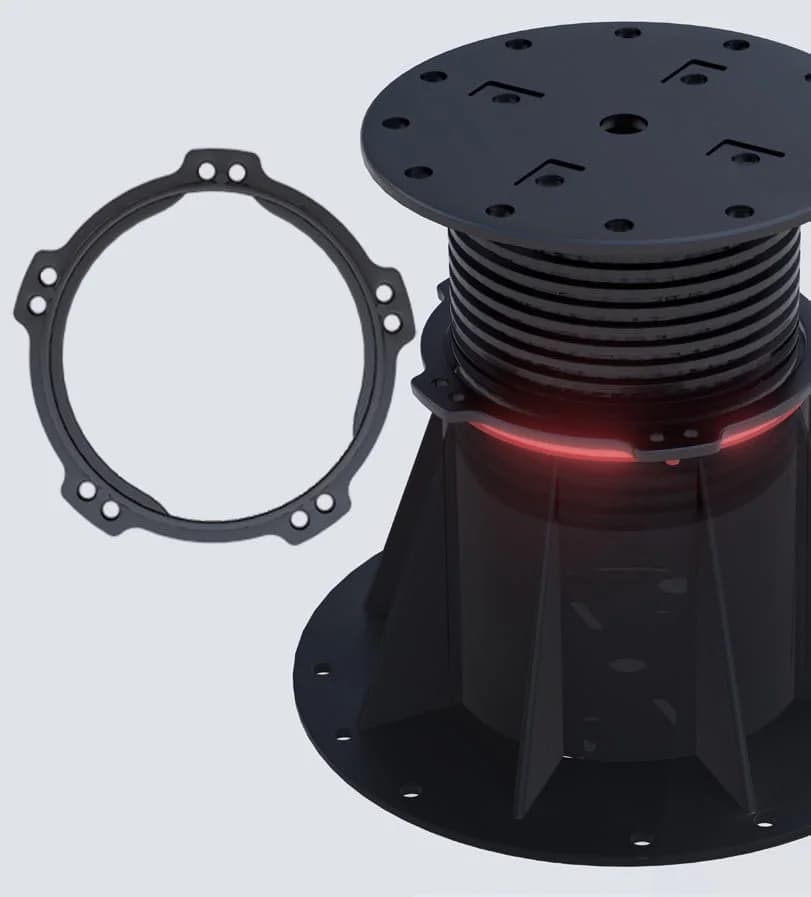
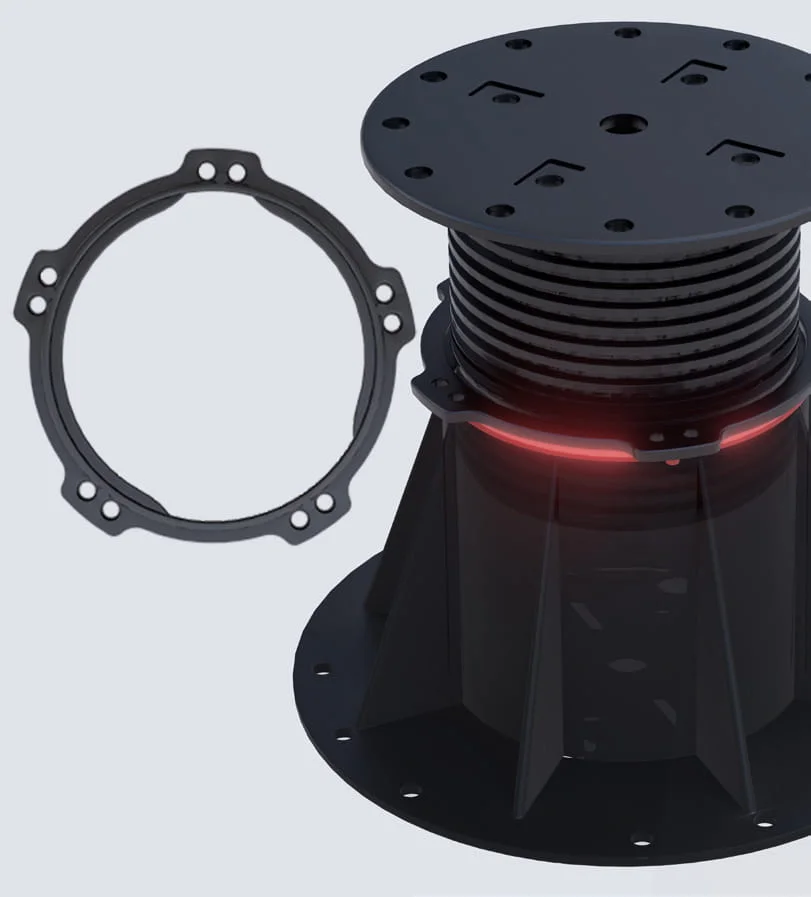
When the finished height reads right, and the screw is still inside the stop, T-L locks the head. The lock is the piece that holds the head at the height you just read. It does not create that height. Locking first and turning afterwards clamps the head while the screw is still short or long, and the reading you wanted never arrives. The lock is opened again only when the height has to be turned again. It is not left open so the head can creep. It is not tightened to hide a reading that was never taken. On the Premium body the lock is a separate small piece. It sits beside the head. It is not moulded into the screw. A module with the height right and the lock missing is only half set. The next person can turn the head without meaning to, and the plane moves. Set the height, then lock it. That sentence is the whole use of T-L. The lock also holds the head against later creep from vibration, but holding the creep does not read the height. The reading is still taken from the top of the head. If the lock is not in the box, the box is short. A missing lock is not assumed to be fused to the body. If its bag is empty, a new lock takes its place. The screw is not forced.
T-SC does not stand in for the turn
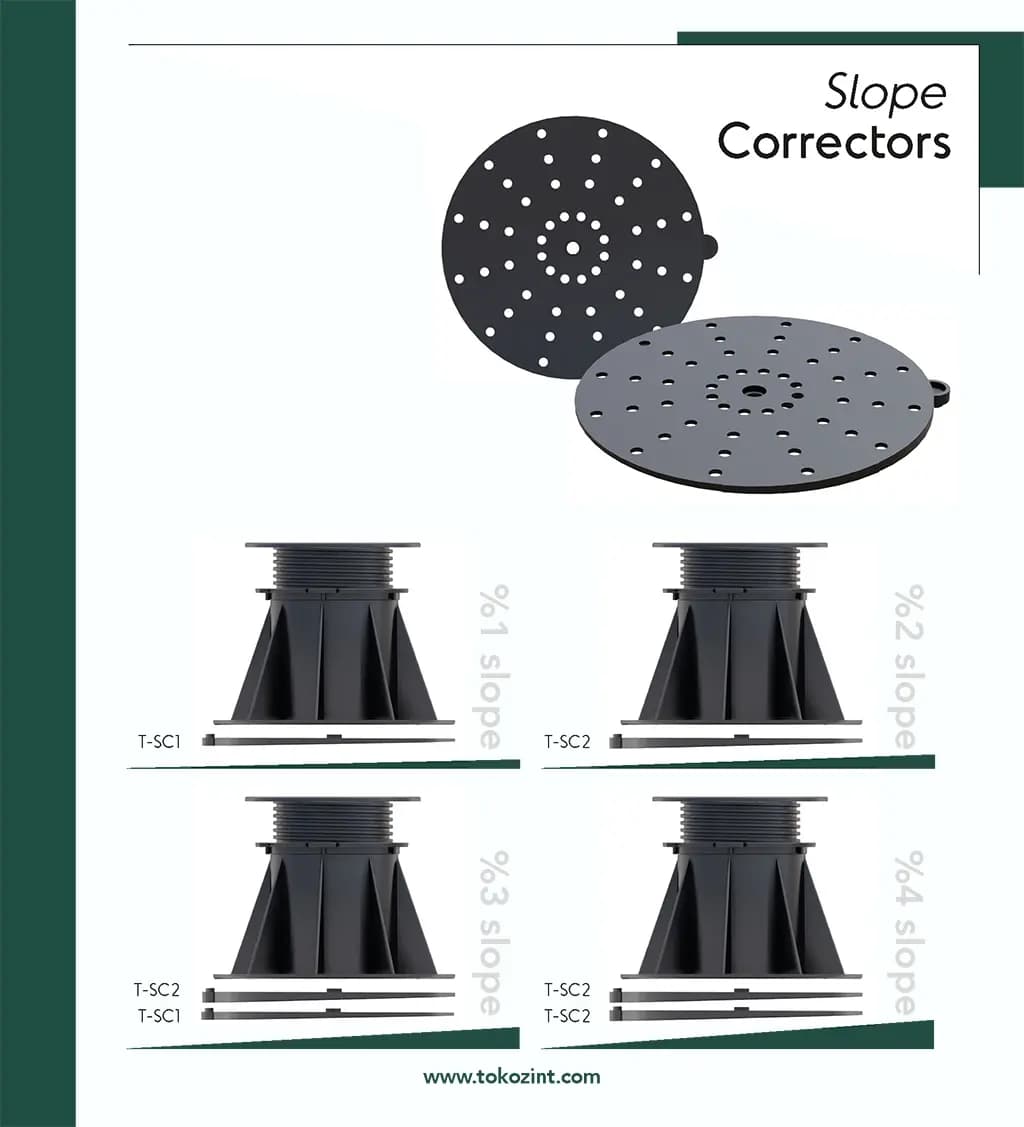
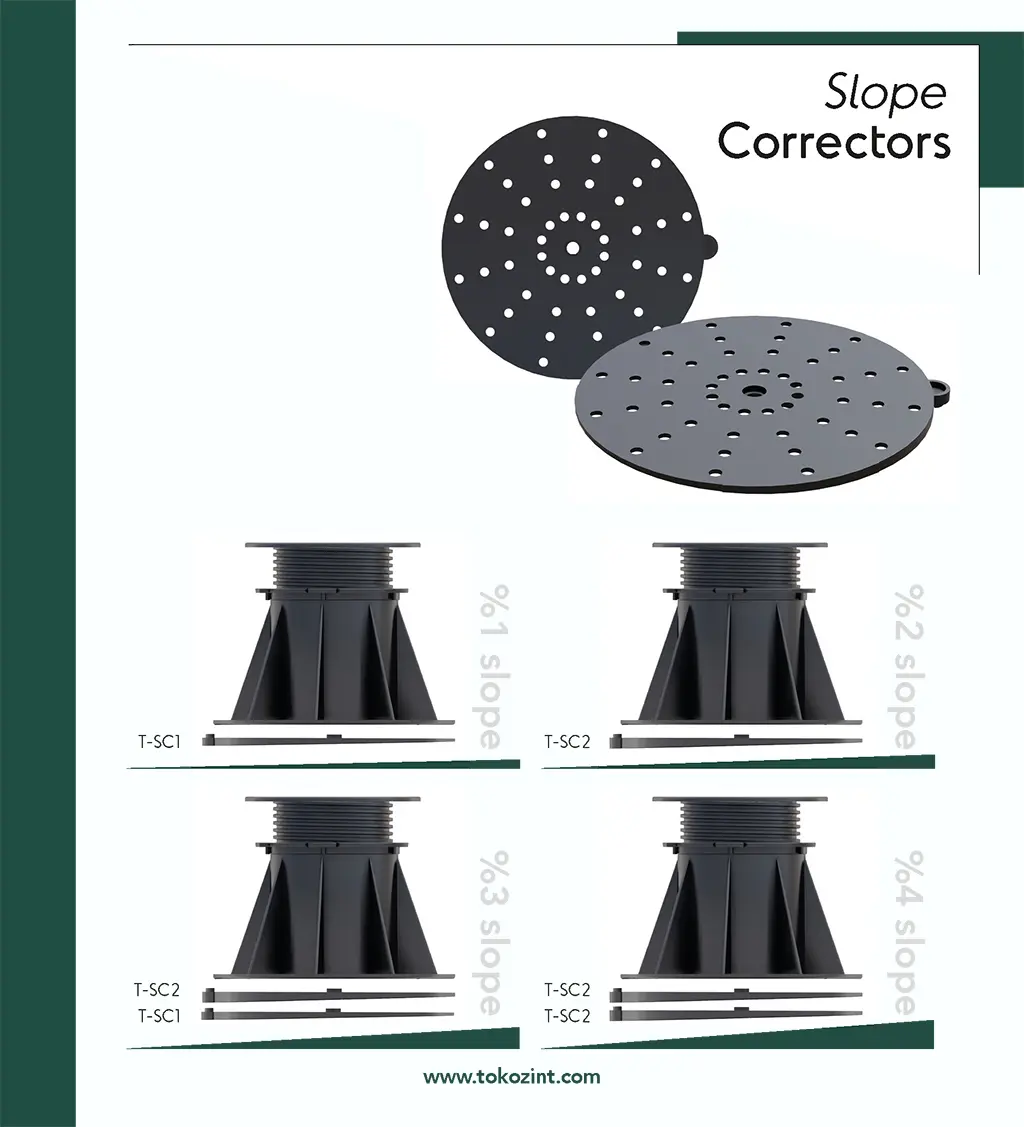
T-SC is a separate decision, taken at the base, and it does not stand in for the turn. The piece takes the fall of the slab. It is made for 1 percent or for 2 percent. The slab falls because water on the waterproofing needs a way to leave. The finish should still sit on one plane. T-SC takes that fall under the base, so the screw does not have to tilt the head in order to chase the slab. The screw is still turned to the finished height. A corrector under a short screw does not make the screw tall. A corrector under a tall screw does not set the plane. If the fall of the slab is not the 1 percent or the 2 percent the piece is made for, T-SC is the wrong piece for that spot. The turn is still done with a module that sits square. Stacking odd washers in place of T-SC is the shim stack moved to the base. The corrector is chosen or it is not. Either way the screw is turned and the height is read. One percent and two percent are two sizes of the same decision. If the size does not match, the piece is not altered and another percent is not invented. The corrector does not climb onto the head. If it does, it is the thing that breaks the plane.
No coupler below 181 mm
Up to 181 mm the Premium screw reaches that height without a coupler. The number is the assembly limit of the body. It is not a suggestion. Inside the limit the sequence stays one screw. The head is turned, the finished height is read, the button is respected, and T-L locks. Adding a coupler below 181 mm does not give a taller declared module. It inserts a joint the body was not asking for. The joint is an extra place that can come loose. It does not add the millimetres the screw already holds. People fit a coupler low because the crate contained one. A piece sitting in the crate is not a reason to use it below its limit. If the finished height sits at 181 mm or under, the order is the body alone. The coupler stays out. The finished height is measured before the decision. A height read off the slab and ignoring the head can look taller than 181 mm and call for a coupler the real finished height does not need. When the head allowance is taken off and the number falls inside the limit, the coupler goes back in the box. A joint below the limit splits the adjustment into two screws. Two screws do not leave one reading.
A coupler is added only above the limit
A coupler is added only when the finished height is above 181 mm. Its job is to lengthen the screw. It does not stand in for the turn. Above the limit the sequence is the same sequence on a longer module. The head is still turned. The finished height is still read at the top. The safe-level button still cuts the screw, and it also stops a coupler that climbs out too far, past the declared range. When the reading is right, T-L still locks the head. The coupler is not turned as if it were a second screw with a height of its own. Two places to turn do not leave one reading. The coupler is fitted, then the one screw is turned, then the height is read once. A tube made on the bench in place of the coupler is not that piece. It has no stop and no declared load. If one coupler is not enough for the height, what gets longer is the catalogue length. The site does not invent an extension. The catalogue sets more than one coupler against a height above the limit. That setting is not an exploded list of parts. The sequence does not change: turn, read, stop at the button, lock. If the coupler is turned as one of those four steps, the reading splits into two numbers. A split number is not the finished height.
The four frames are one sequence
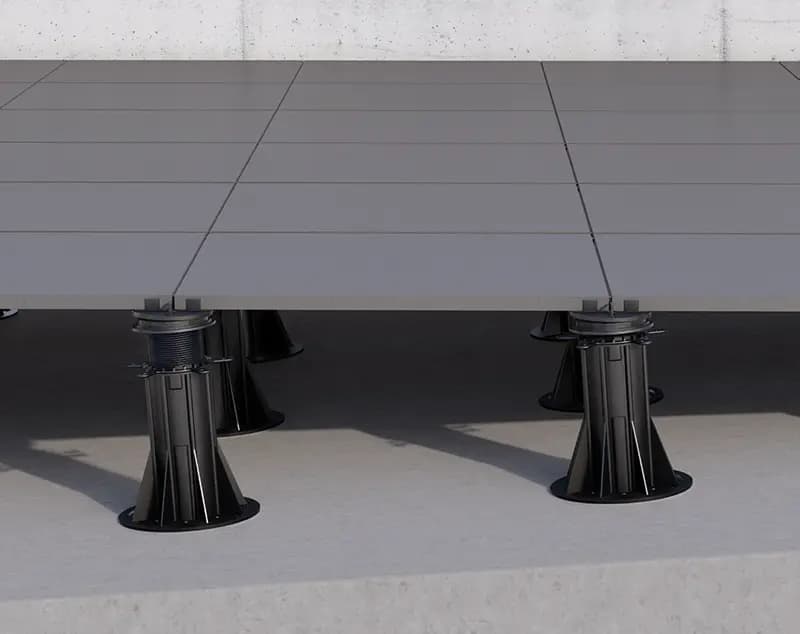
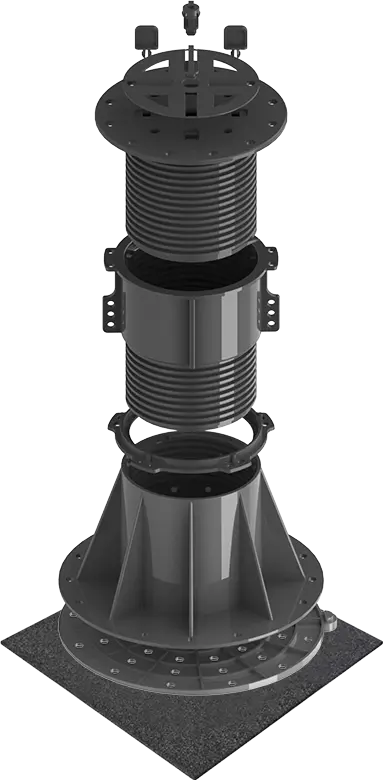
Read the four frames as the sequence, not as a box of parts. The first frame is T-SC at the base, the separate decision that takes a slab fall of 1 to 2 percent and does not set the height. The second frame is T-L, the lock that closes the head only after the height reads right. The third frame is the Premium body itself, the one screw you turn, with the safe-level button on that screw. The fourth frame opens the same body so the screw is visible between the base and the head. It is not a catalogue. A piece that is not in the sequence is not named here. Shims are not stacked beside this screw. Below 181 mm a coupler is not counted as part of the turn. This pedestal is pressed in Çorlu. The height on the layout still decides whether the screw alone is enough, or whether a coupler belongs above 181 mm. The order of work does not change with that decision: turn, read, stop, lock. Using the open frame to count every nut turns the sequence into a list. A list does not tell the hand when to stop. The thing that stops is the button. The lock comes after the stop.