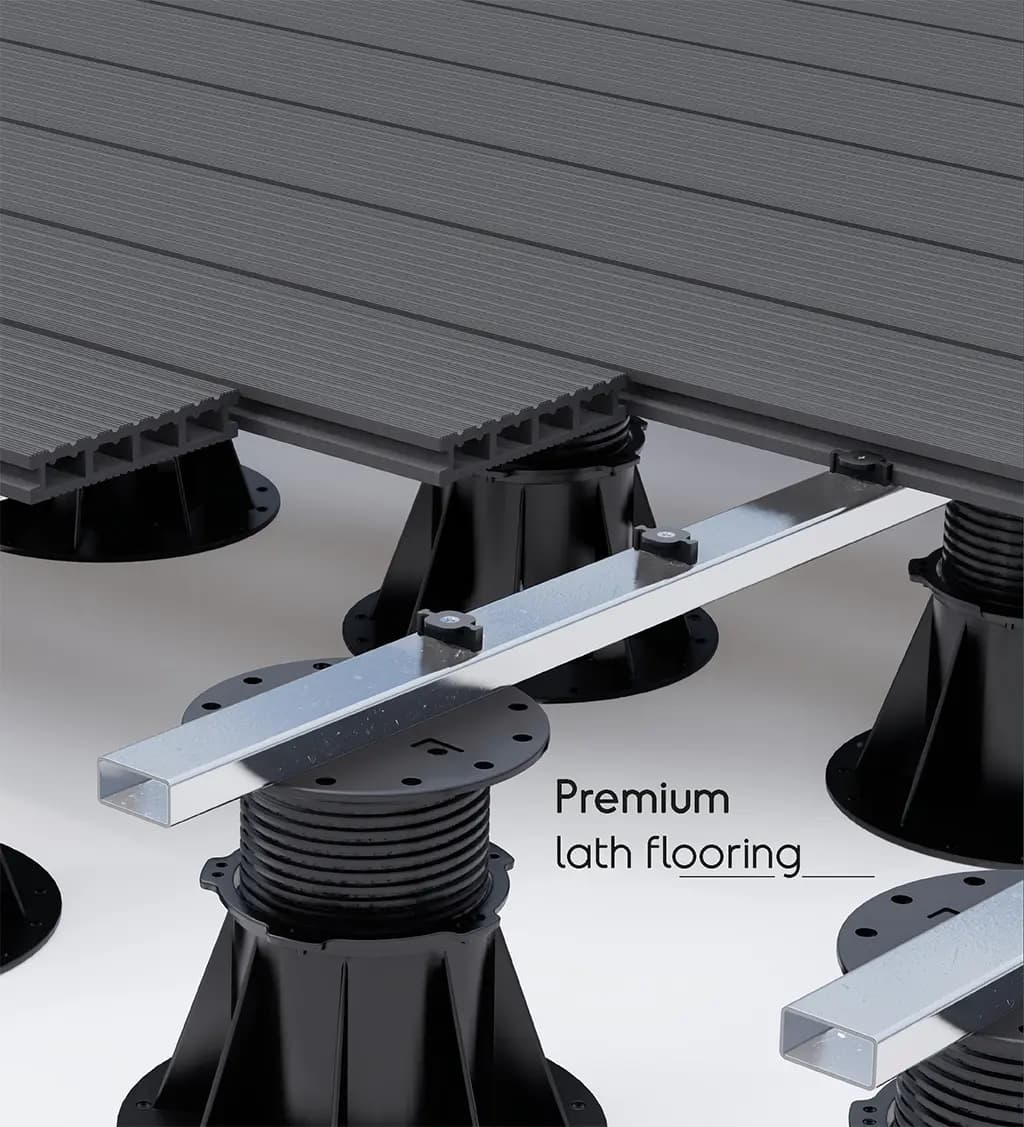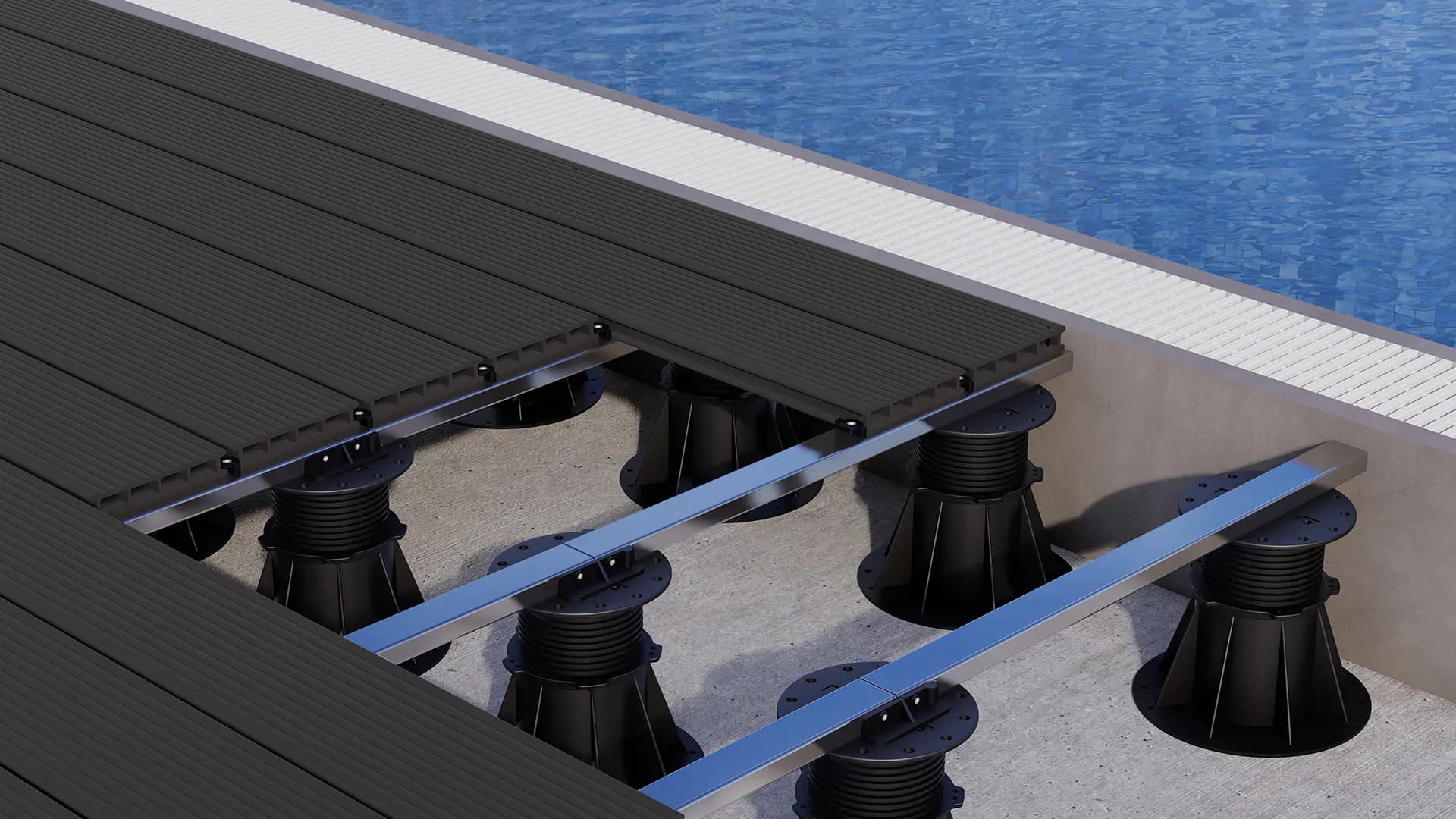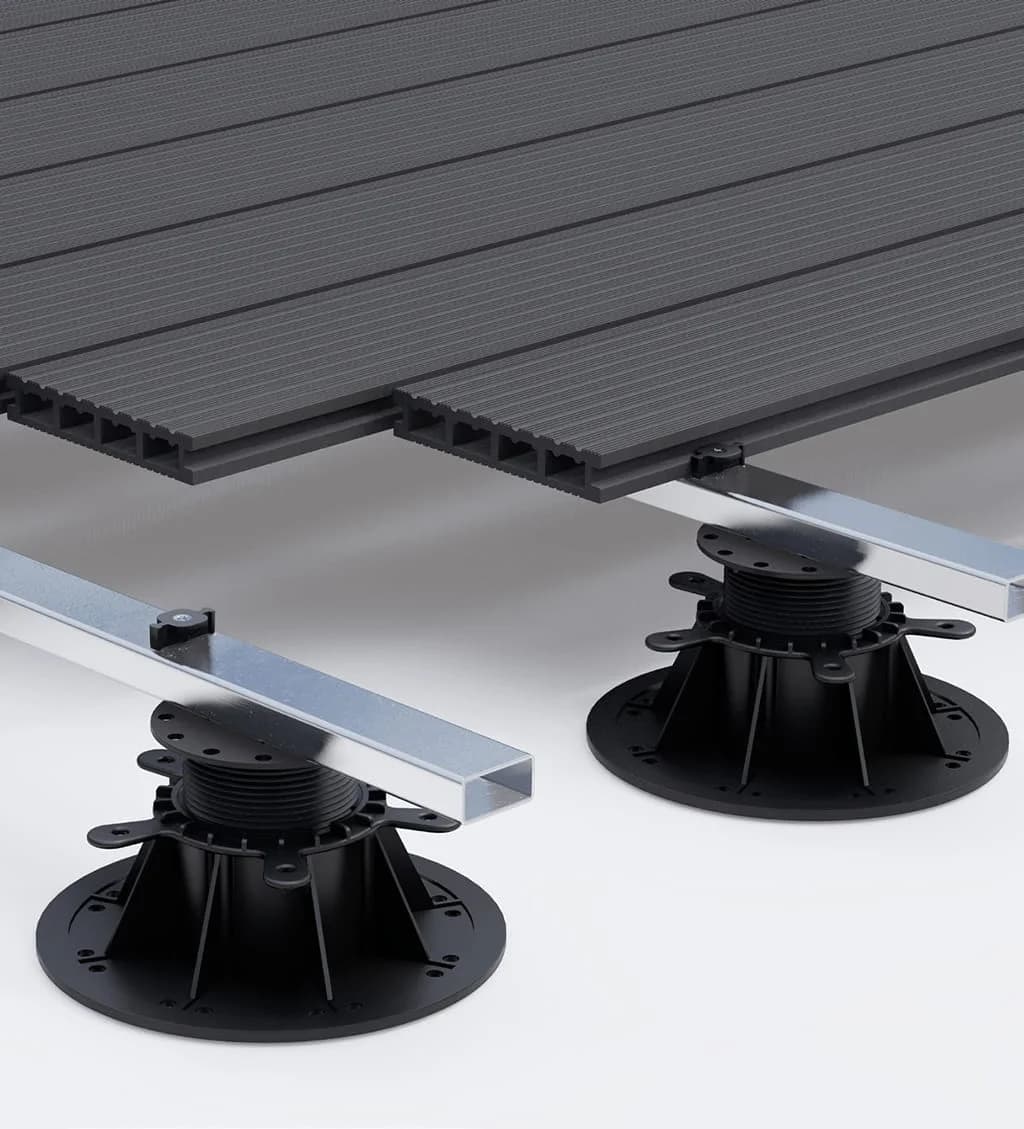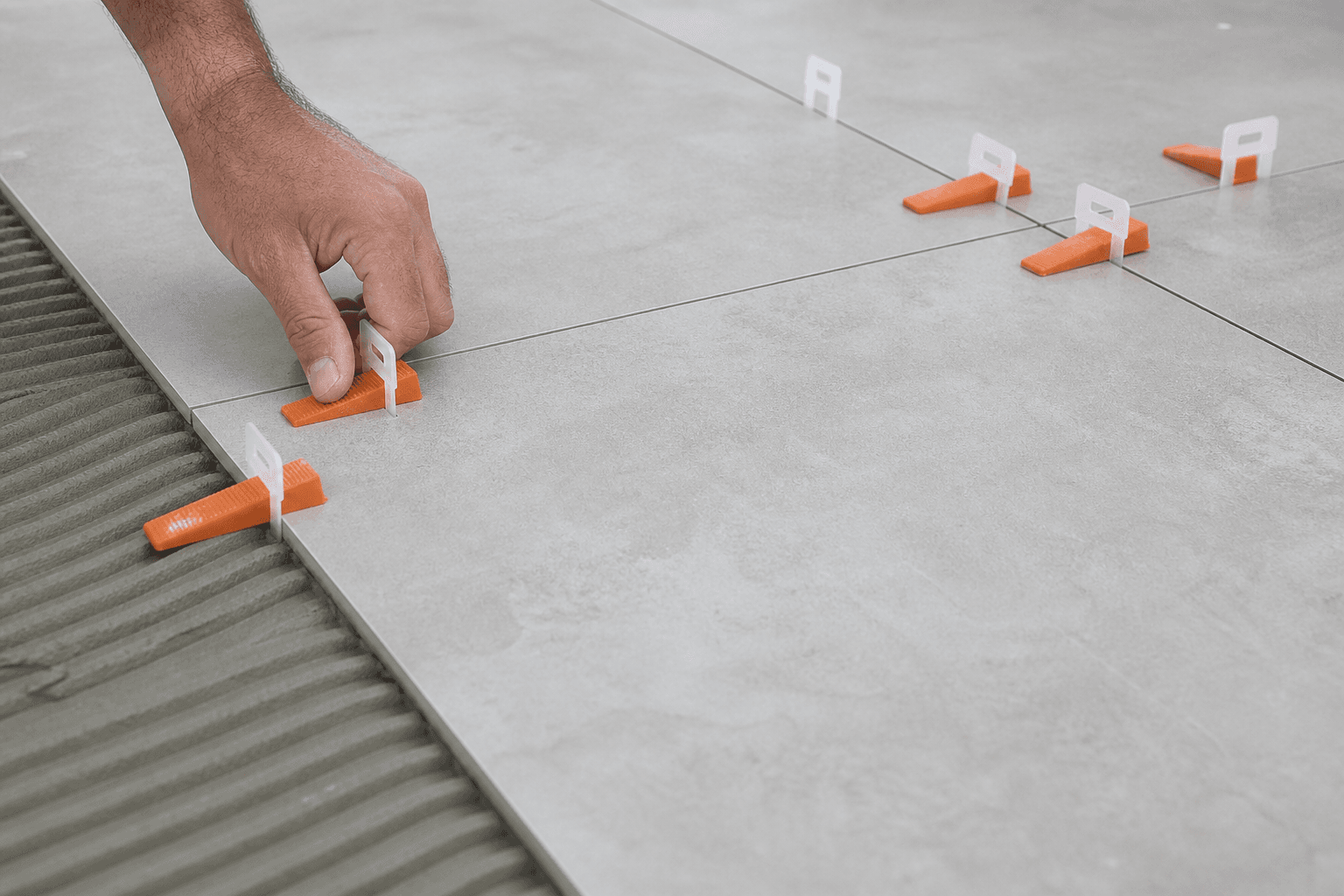
A raised floor is the void Tokoz pedestals, pressed in Çorlu, leave between finish and waterproofing. The finish is not bonded down. Water drops through the open joint and follows the fall of the membrane.
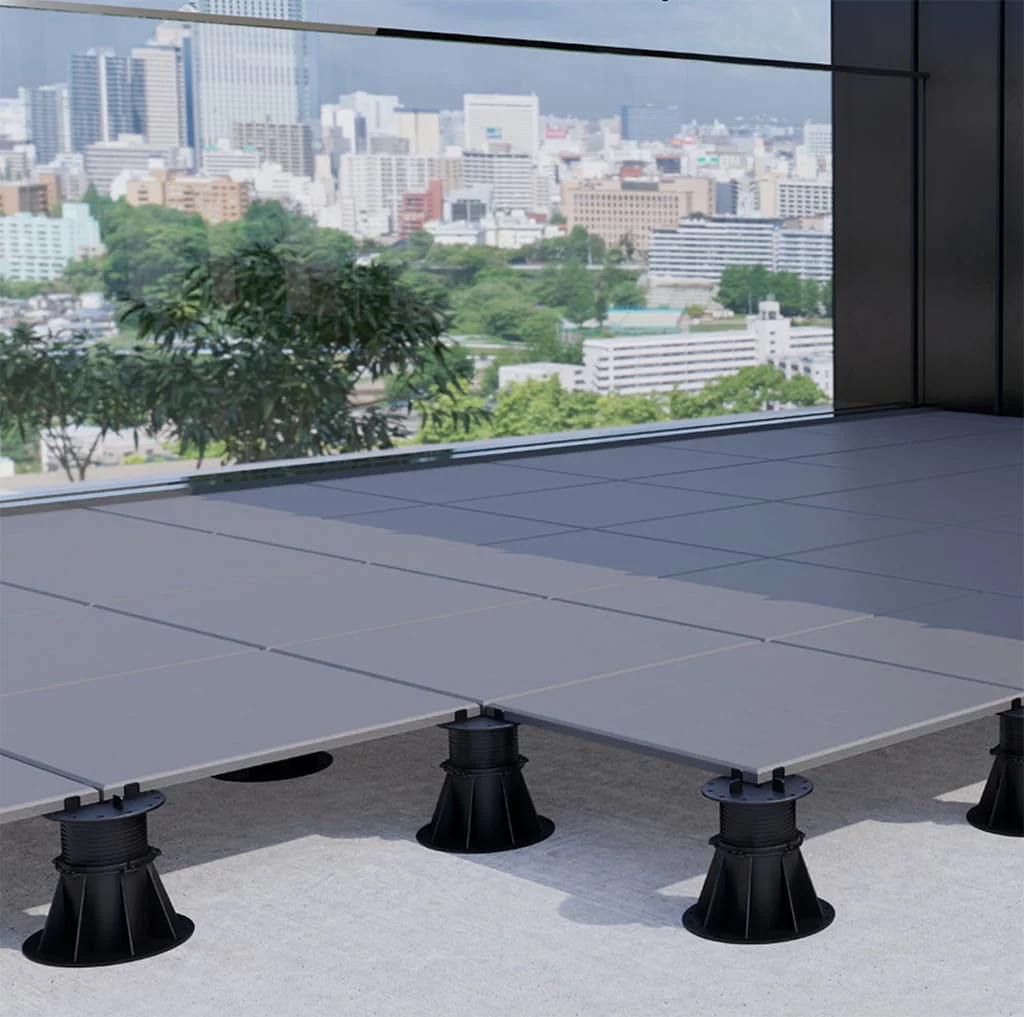
Raised floor does not pull a body code out of a catalogue. It is the air gap left on purpose between the finish and the waterproofing. Without that gap the finish is stuck to the membrane. Opening one spot then means breaking the whole surface. Tokoz does not fill this gap with mortar. The finish stands on the pedestal head and does not touch the waterproofing. Water does not pond on the finish. It drops through the joint into the gap, and there the membrane keeps its own fall. The plane that should be flat is the finish on top, not the concrete below. This piece is about that gap. The piece that takes a body apart is another day.
The finish is a lid
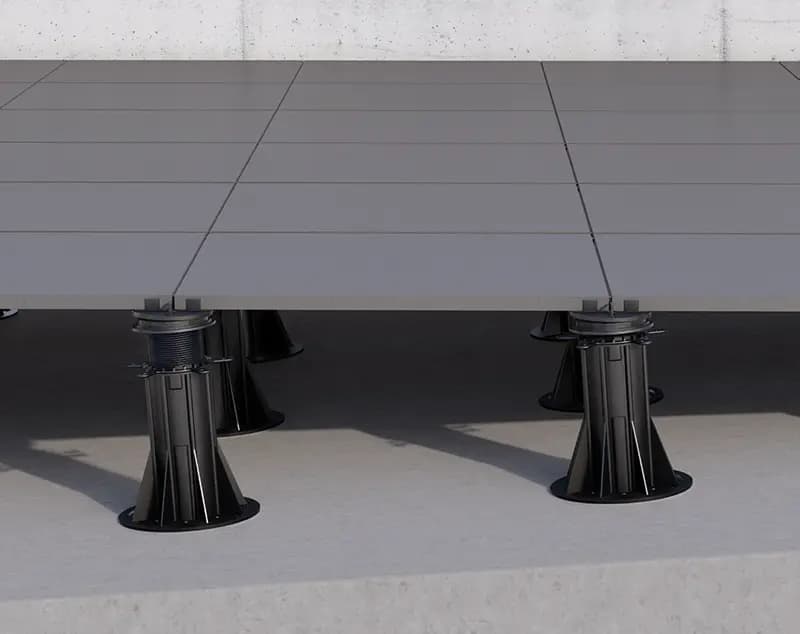
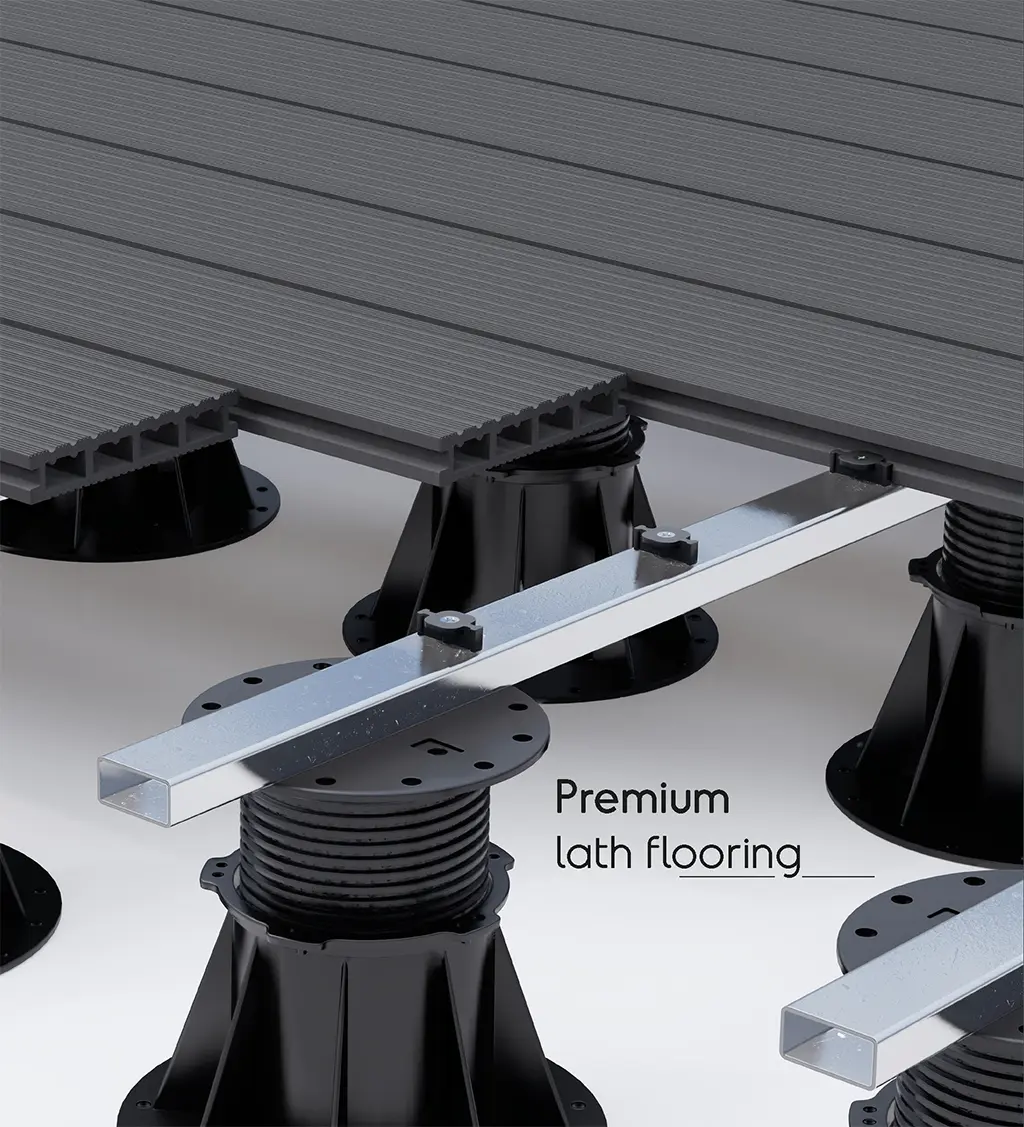
The lid is not the support. The support is the head. The lid sits like a plate across heads and it can come up. Adhesive under it would close the void and the floor would stop being raised. A tile lid and a finish on joists follow the same idea. Neither one comes down onto the waterproofing. The joist is a second grid inside the void. The grid changes the direction of the lid. It does not cancel the void. The weight of the lid and the walking on it go into the head. In the Premium family the declared point is one thousand kilograms. That number is not the load of the whole floor. The whole load is shared by the heads on the layout.
The fall stays underneath
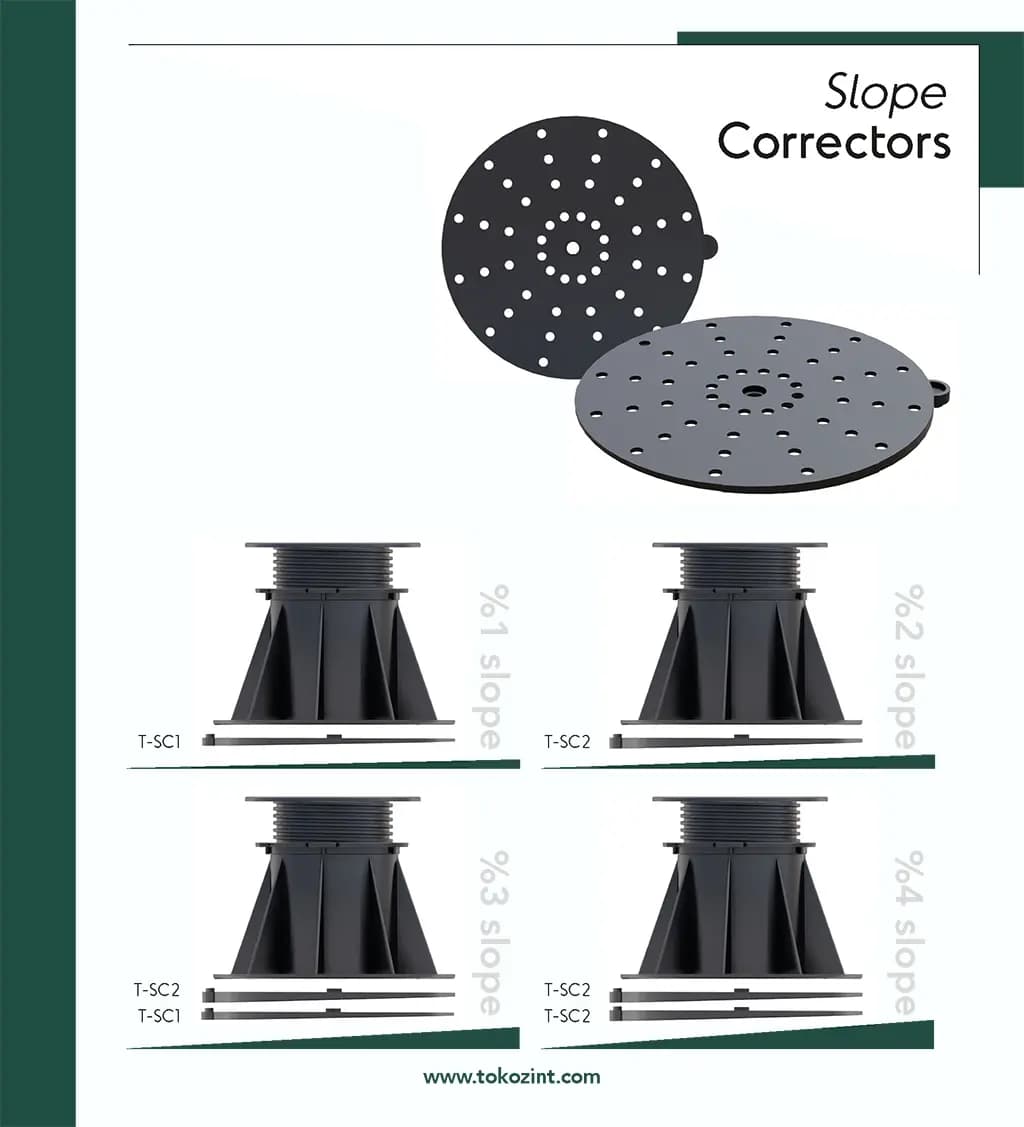
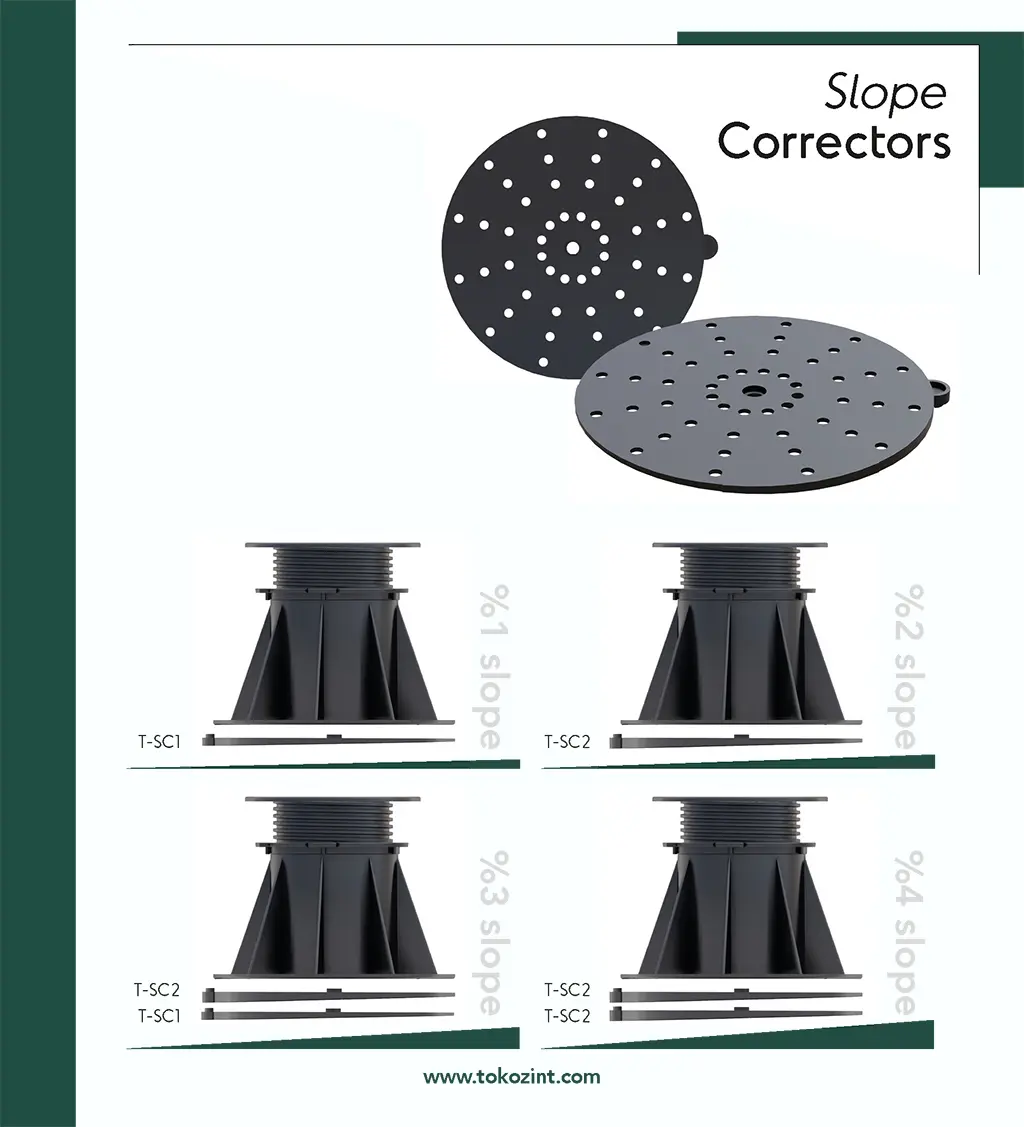
The membrane is sloped so it can carry water. The lid is there to sit flat. Forcing both into one plane either ponds water on the lid or tilts the lid. Tokoz does not correct the fall in the lid. T-SC is a separate piece that takes a difference of 1 to 2 percent at the base. It takes the slope of the surface the pedestal stands on, without breaking the plane of the lid. Each pedestal takes its own difference. Two neighbouring screws can be different lengths. Different length does not mean the floor is twisted. It means the lid is one plane and the surface under it is not. Putting the corrector on top of the head, inside the lid, erases that split. The corrector stays at the base.
What may sit in the void
The void is not a services design. Tokoz does not draw a cable route, pick a drain diameter, or calculate a rainwater drop. The void only carries the height in which those things can sit between lid and waterproofing. A pipe that does not fit lifts the lid. A lifted lid looks like a floor fault and is really a wrong height. The height is read so that the thickest thing passing through still has a finger of room above it. That room is set by the highest obstruction on that terrace, not by the shortest pedestal in the catalogue. If there is no obstruction, the height is still not written at random. The door threshold, the top of the parapet and the lowest point of the membrane all stand at once. If the three do not agree, the threshold is discussed first. The pedestal code comes after.
What shows when one lid comes up
One tile or one board comes up without breaking its neighbours. Under the lifted lid the membrane, the fall and any pipe are visible. Repairing what you see does not require taking up the whole floor. That is the site reason for a raised floor. The reason does not change if the lid is locked. The lock is there so the lid does not fly in the wind. When the lock is off, the lid still comes up. A lock that stays on does not make repair impossible. It only lengthens the sequence. After the repair the lid comes back down on the same head. If the head has moved, the void has moved too, and the fall of the water is checked. The check is by eye. This piece does not describe a watertightness test.
A protective screed does not fill this void
A protective screed is the layer poured on the waterproofing that the finish bonds to. A raised floor does not have that layer. Its absence is not a missing item. Pour the concrete and the void closes, the lid will not lift, and the water disappears inside the concrete. A Tokoz pedestal is not a fill put in place of that concrete. The pedestal is the point that keeps the void open. Air stays between the points. If the air is gone, this piece is describing another system. Setting pedestals later on a terrace that already has a screed does not create a raised floor. It creates a second height on top of the screed. If that second height is wanted, the threshold and the railing are measured again. If it is not wanted, the screed is outside this piece.
Neighbouring pedestals do not have to match
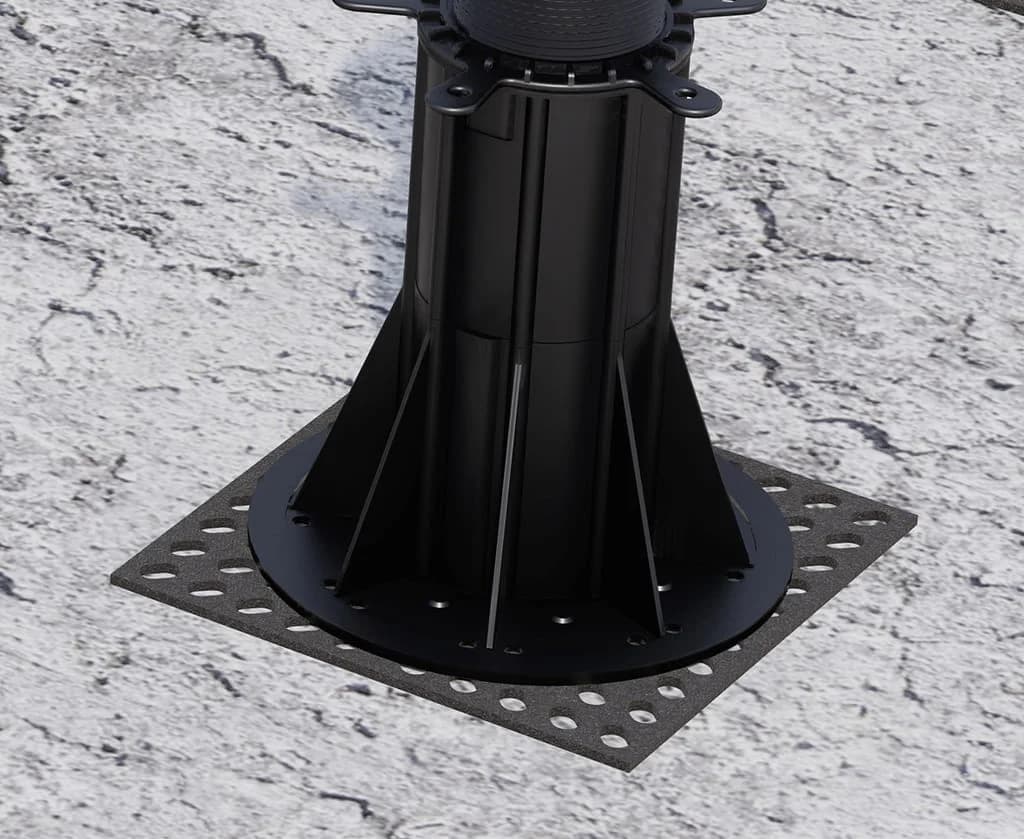
Two neighbouring heads touch the same plane of the lid. Their screws do not have to show the same millimetre. Treating that as a rule tilts the lid on a sloping membrane. On a tilted lid the water ponds and the joint cannot do its work. The reading goes like this. A level for the lid is held in one place, and each pedestal is turned until it meets that level. The screw that meets it may be short or long. The short one stands on the high ridge of the membrane. The long one stands in the hollow. That difference is not a defect note. The defect is two heads setting the lid in different planes. If the plane has broken, it is not the screw. The pad or the slope piece under the head has shifted. The bearing is put right first. Then the screw.
This void is not a flow calculation
People say the void carries the water. That sentence is not a rainfall calculation. Tokoz does not write the flow of a terrace, the number of drains, or a wind pressure on this page. What is written is this. Water is not trapped on the lid. It drops through the joint and travels on the fall of the membrane. If the path is blocked, the void is not at fault. The fault is mortar packed into the joint, a screed that has crept under the lid, or a piece of membrane left falling the wrong way. Turning a pedestal does not fix those. The mortar comes out. The screed is not broken because this system has no screed. The fall of the membrane is checked in place. A quotation is asked with the height of the void and the number of heads. Flow belongs to another table. The pedestals are pressed in Çorlu. The count comes from the layout.