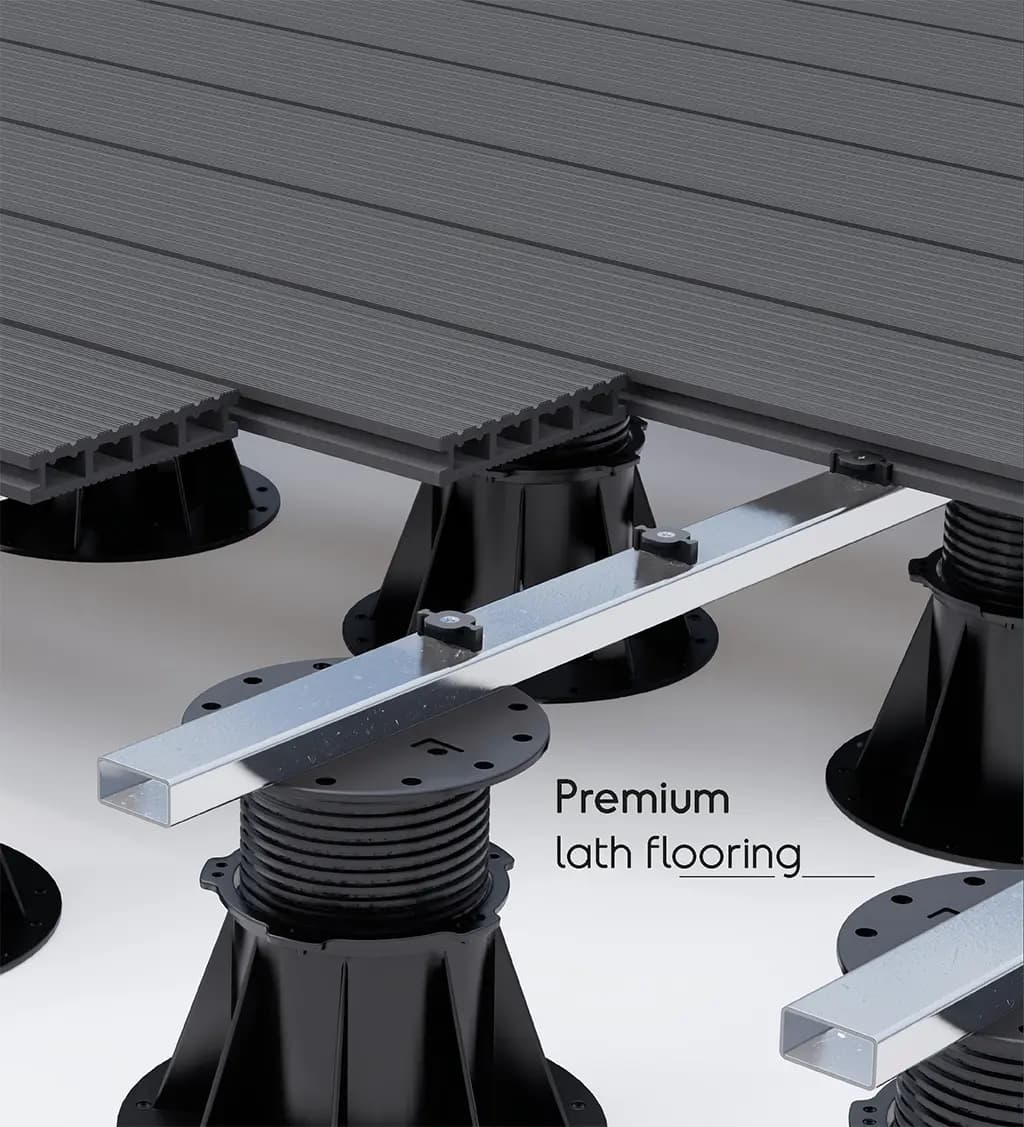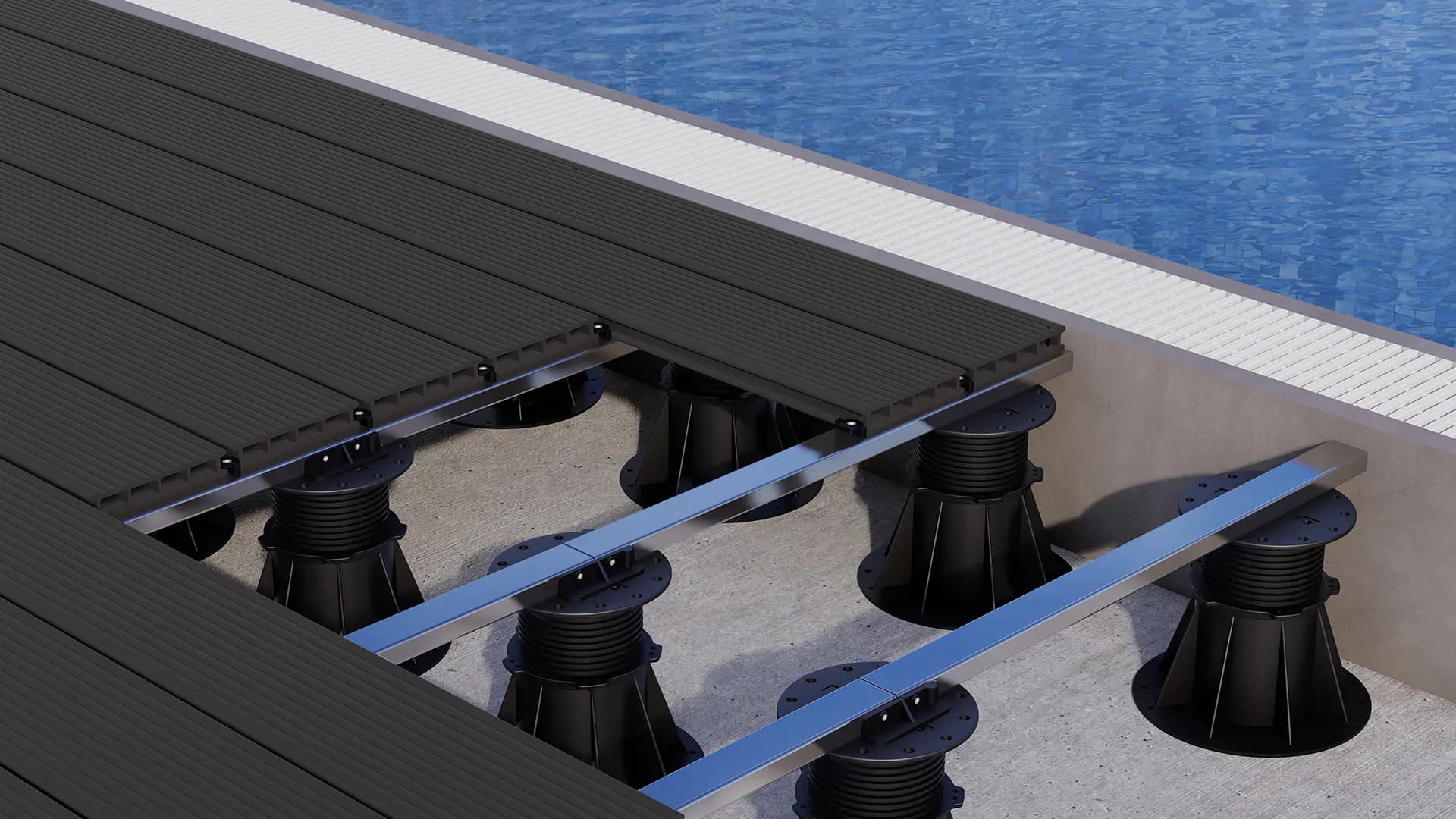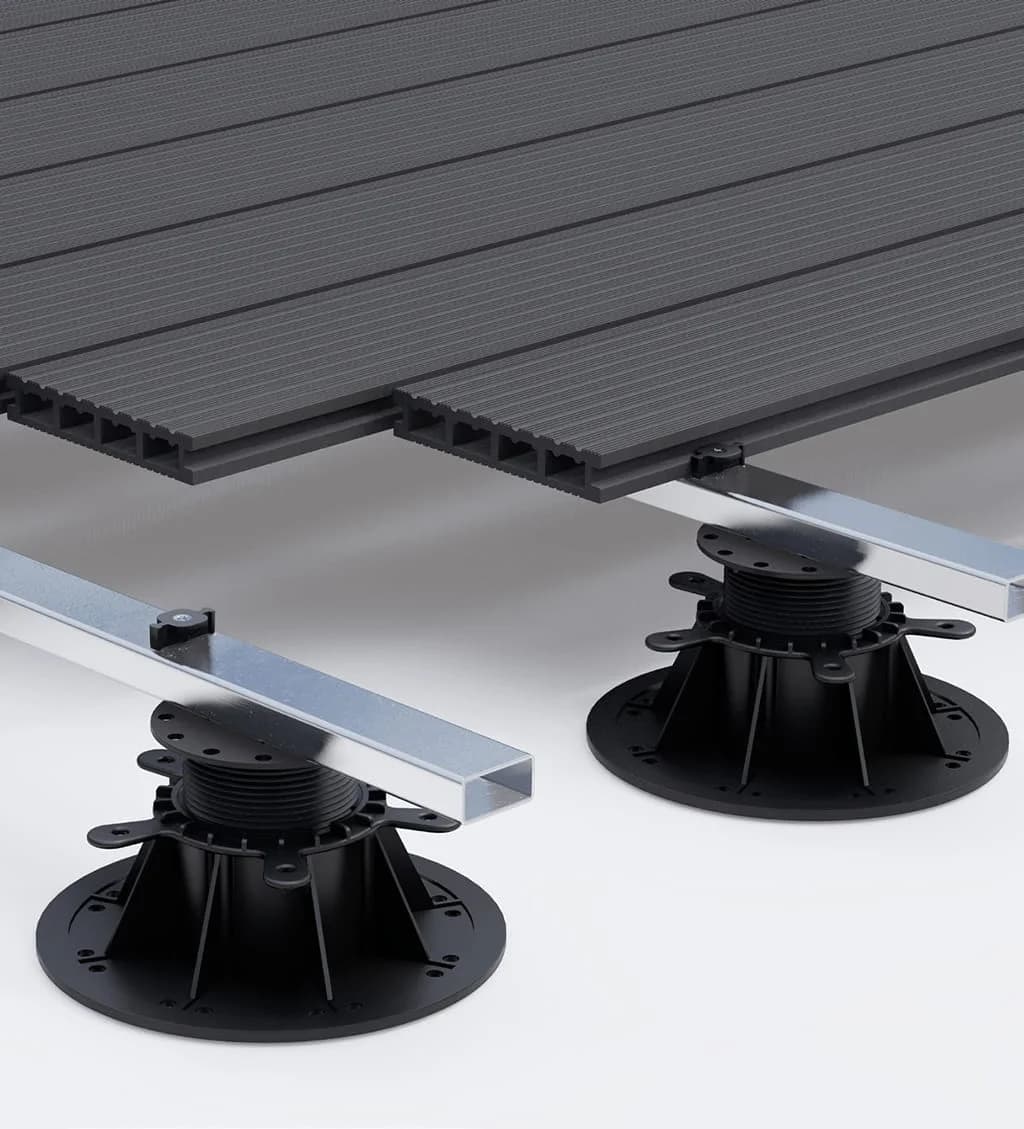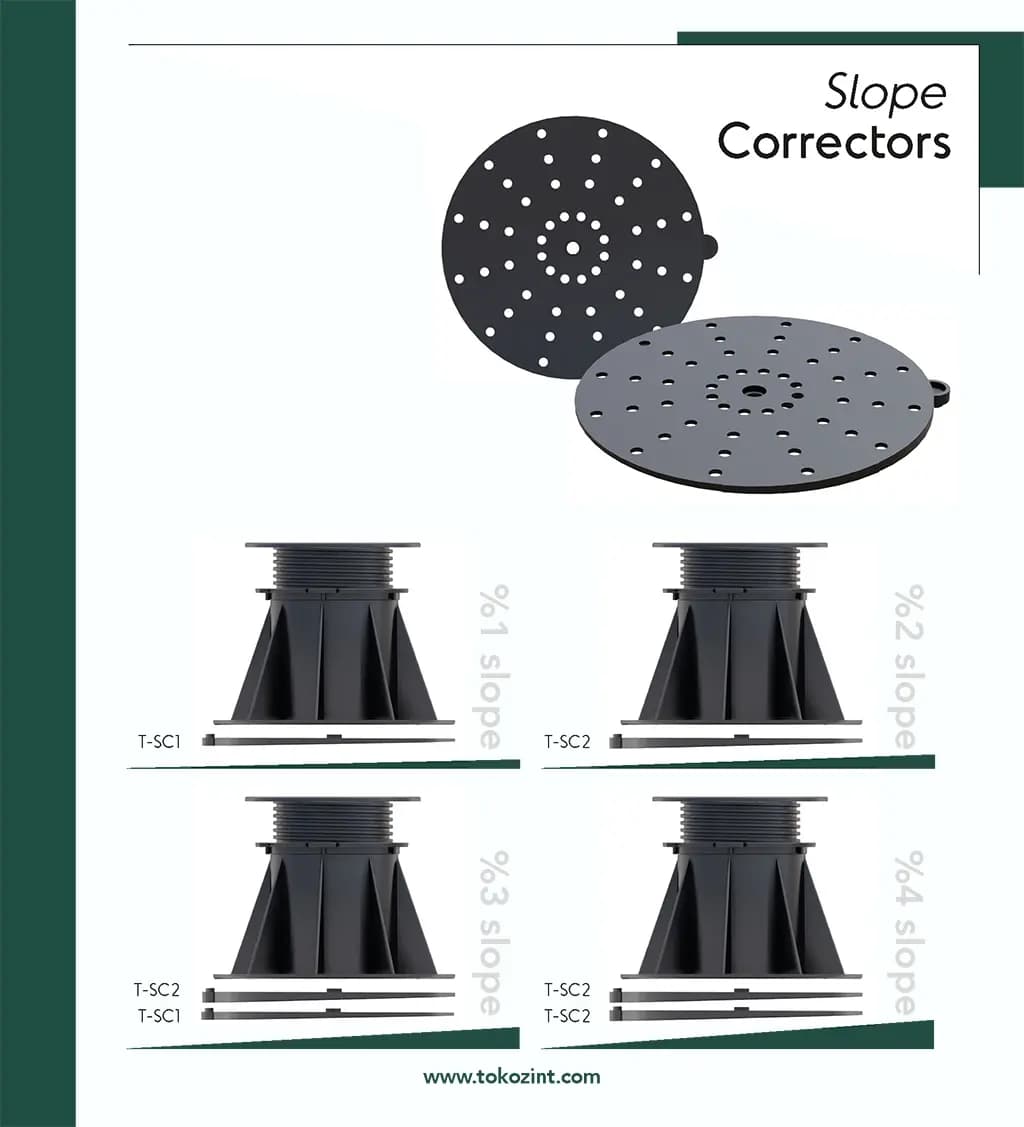
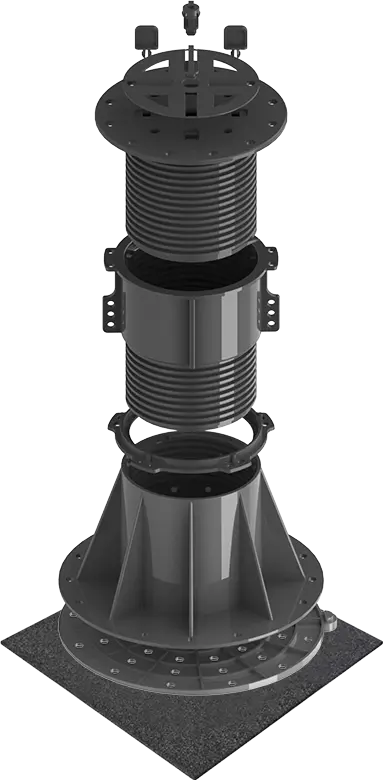
Tokoz presses this adjustable pedestal in Çorlu. The Premium line is a 1000 kg point load. The base sits on the waterproofing, the head carries the finish, and the screw sets the height. No coupler is required up to 181 mm.
An adjustable flooring pedestal is the part people ask for, not the whole terrace kit. The kit is arranged around it. On site the question is where the base ends, where the screw turns, and where the head picks up the finish. On Tokoz Premium those three pieces are one module, rated 1000 kg at a point. The base sits on the waterproofing and does not pierce it. Height comes from the screw, not from a mortar bed. This page is a section through the part, not a project story.
How the screw height is locked
Adjustment is not a stack of shims. The head is turned, the finished height is read, and the safe-level button stops the screw past that limit. The button is not decoration. If the head or a coupler runs out too far, the module stops being a rated support. Tokoz moulds that stop into the Premium body. When the height is set, the T-L lock holds the head to the finish. The lock is opened to adjust again, not to hide the height. That order is the pedestal’s own instruction.
The 181 mm limit
On the Premium pedestal no separate coupler is fitted up to 181 mm. That figure is an assembly limit, not a slogan. A coupler is added above that limit to lengthen the screw. Fitting one below the limit does not make the part taller. It only adds a joint. The order dimension is the finished level minus the base allowance, read from the Çorlu catalogue range. A shop-made spacer does not carry the stated load of the pedestal.
What the head carries
The head seats the finish at four points. Tile sits on the head, a batten goes to a joist holder, WPC goes to a clip line. One head does not do all three. For tile, the T-ST stick sets a 2–8 mm gap and turns through 360 degrees. For decking, the T-DCN clip is a separate line. This page is not the accessory brochure. The accessory bolts to the head, and the load still comes down the pedestal body. The wrong head wastes a correct pedestal. On the order, head type is a line of its own, apart from the height.
When 1000 kg is the line to write
The Premium pedestal is declared at a minimum point load of 1000 kg. That is not the weight of the whole floor. Each pedestal carries the share under its own head. Placing a 500 kg family beside it on the same plane shows up as a step at the slab edge. The step looks like a bad adjustment. It is two ratings side by side. One order states one capacity. 1000 kg does not replace a wind check on a roof. The wind lock is another part. The load line and the lock line are not the same line.
What this page does not replace
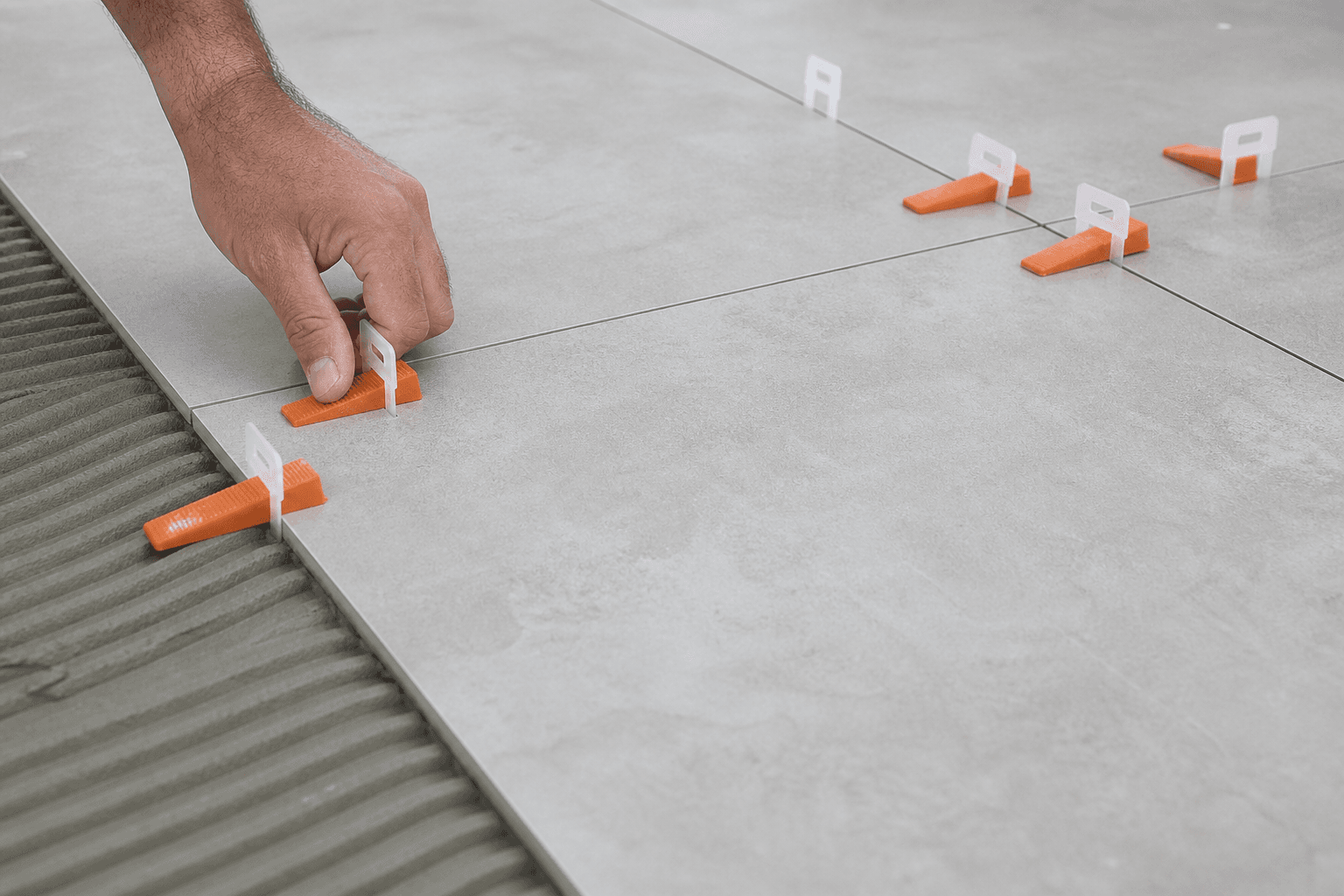
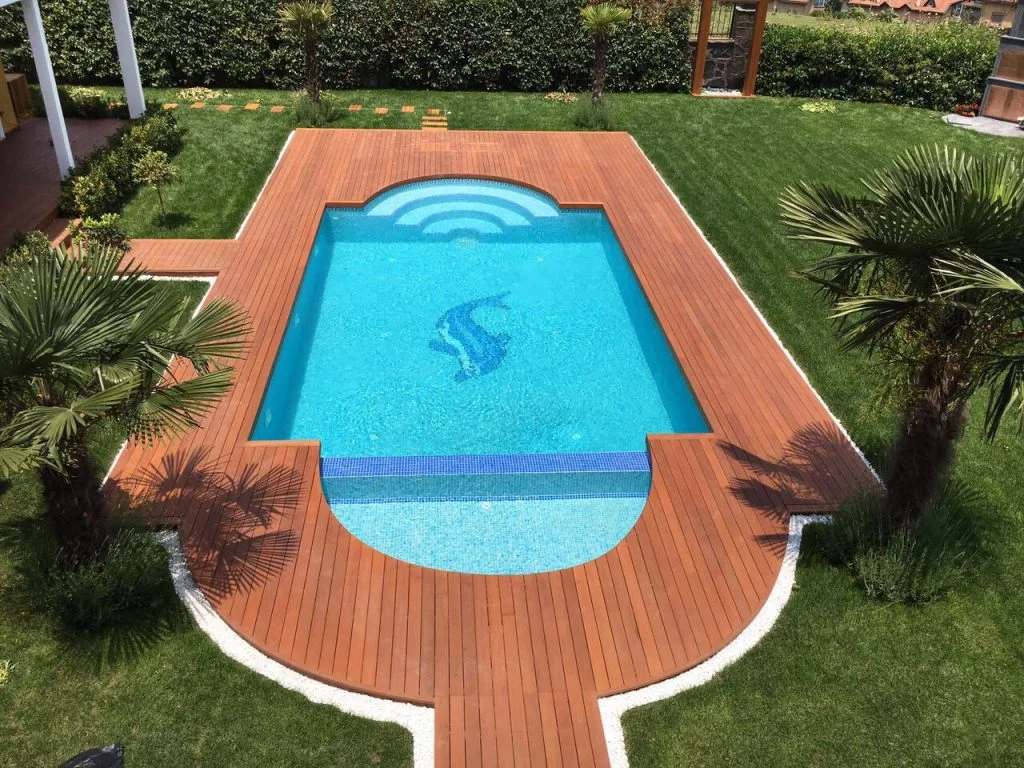
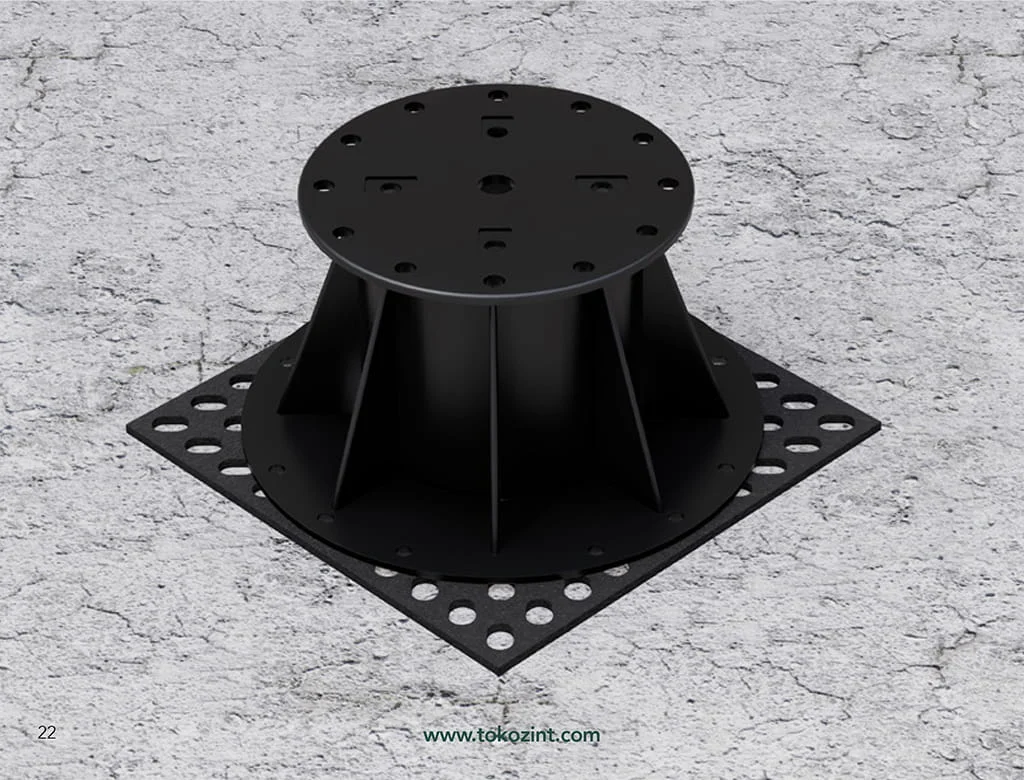
A part page does not quote a price, run a wind calculation, or pick the joint instead of the project. The T-ST range of 2–8 mm is a catalogue value. The joint on a job is written from the finish itself. Tokoz presses these pedestals in Çorlu. Height and head code come from the catalogue. The count comes from the site plan. A quotation is asked for from the contact page. The photographs are the exploded module, the body, the base pad and the lock. Those four frames are not a finished terrace.
Why the base pad is a separate piece
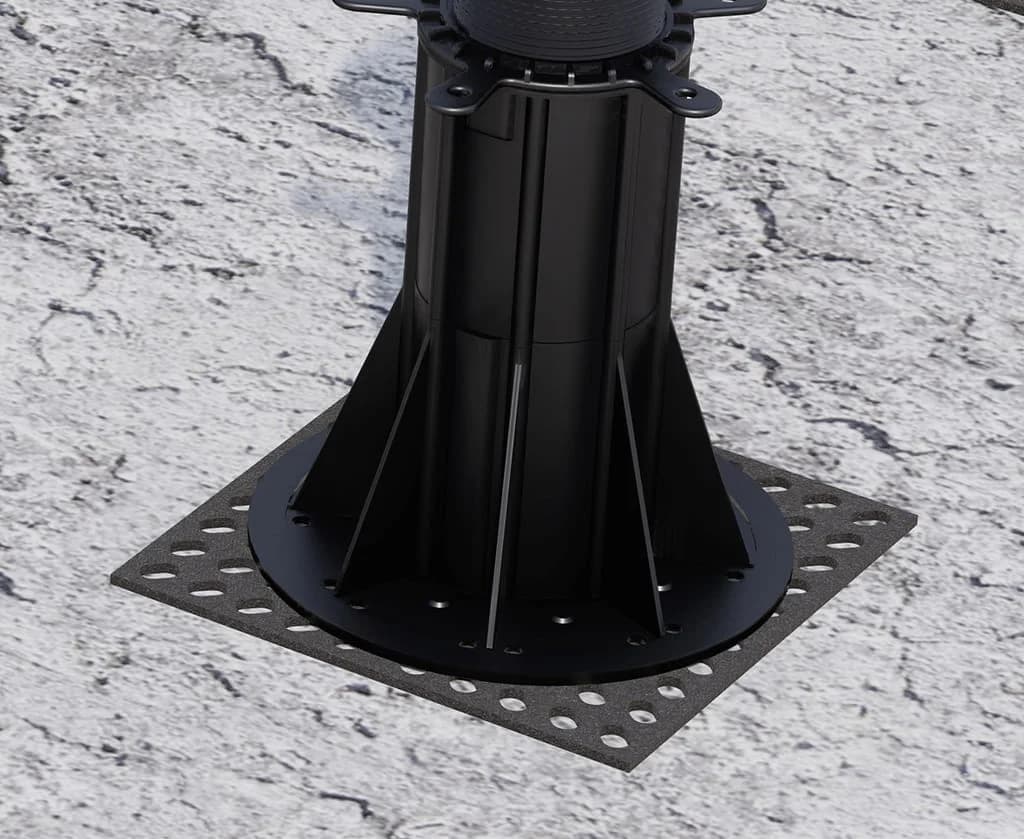
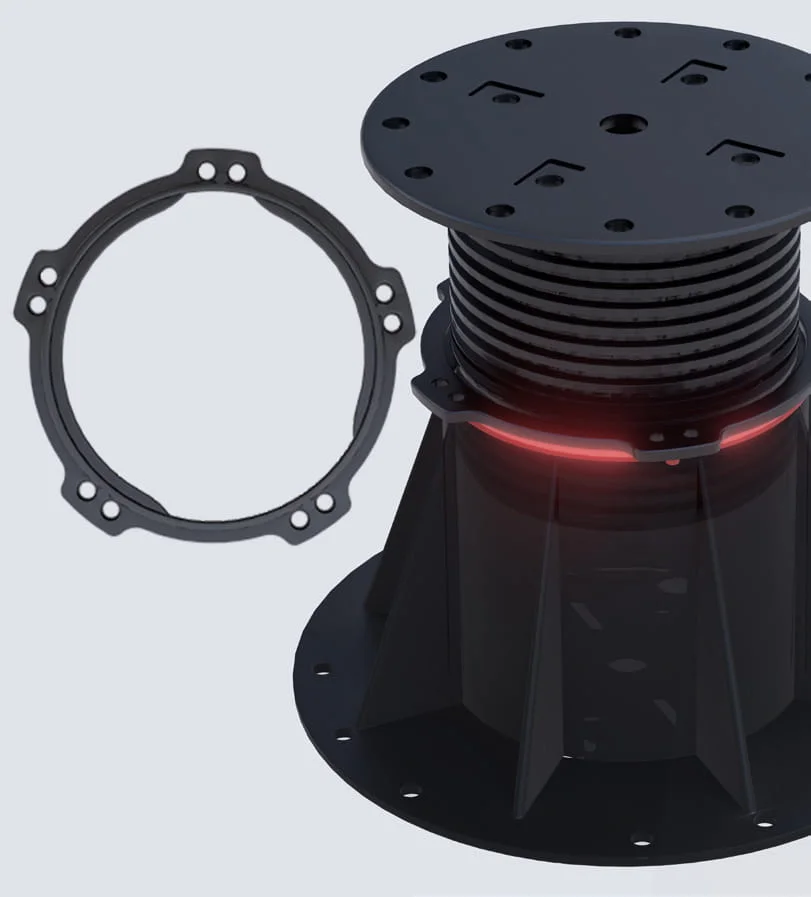
The T-P pad is not the body of the pedestal. The body carries the load. The pad spreads the base on the waterproofing and stops the foot from biting into a small bump. Pulling the pad off and standing the pedestal straight on the membrane changes the bearing that was declared. When the pad wears, the body stays and the pad is replaced. That split is two lines on an order. In the photograph the pad is a thin ring under the body. Reading the ring as the head misreads the height. On this page the pad has its own frame.
What the body is pressed from
The Premium body is recycled polypropylene. That sentence answers why the part is not a metal foot. It is not a badge. A metal foot brings welds and corrosion. This body holds the thread in plastic, takes a head from the same family, and is pressed in Çorlu. Recycled does not lower the rating. The rating is still 1000 kg. Writing a different material in place of this body throws off the thread pitch and the lock seat. On the order, the material line says PP. It does not replace the load line.
How to read the exploded photograph
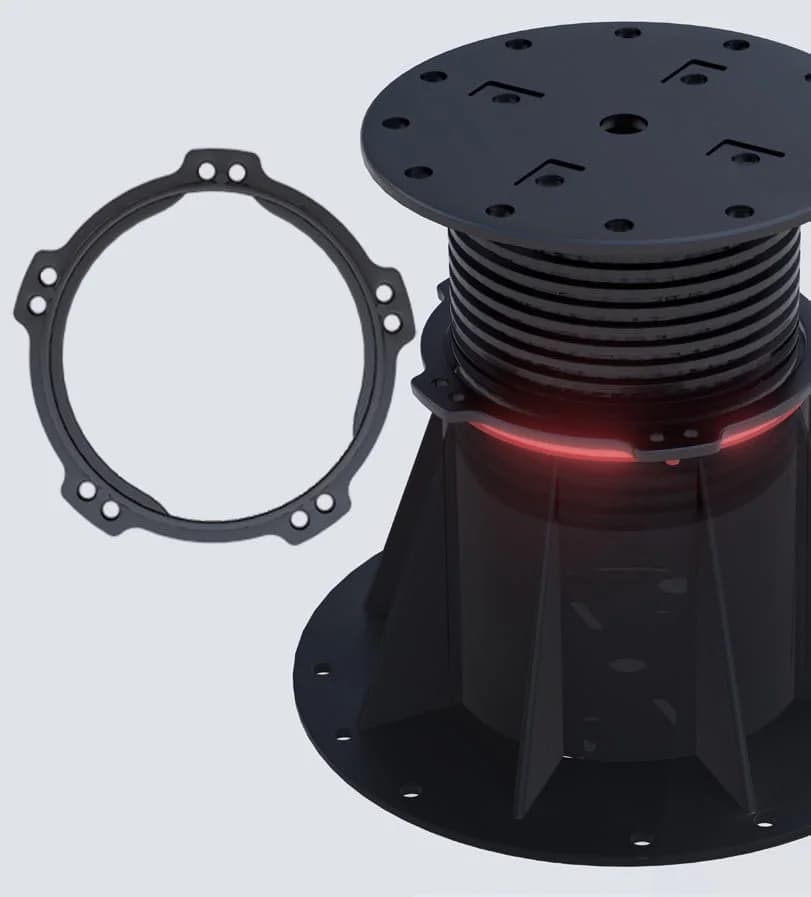
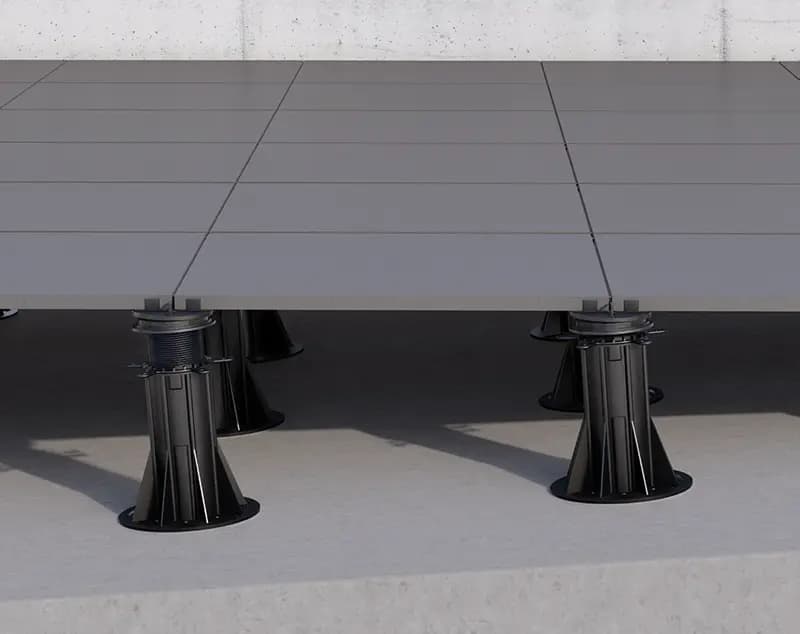
In the exploded frame the pieces stack from the base, through the screw, to the head. Read it backwards and the screw looks like an accessory. The screw is the body. The stick above the head is not part of the body. The T-L lock is a small piece beside the head. Counting the four as one item opens one bin instead of four, and the site comes up short. The other three frames show the same pedestal bare, with the pad, and with the lock. None of them is a finished terrace. A finished terrace is a picture from another job.
How to read one order line
One line carries three things side by side: the body height, the head code, and the count. If the height is a range, the site stays inside that range. Writing a single millimetre instead of a range locks every pedestal to one height and bends the finish on a sloping base. The head code chooses the finish. A tile head and a joist head can sit on the same body and still do different jobs. The count is the number of pedestals on the layout, not a guess taken from the square metres. No layout, no line. The pad, the lock and the joint stick are not hidden inside this line. They are their own items. A hidden item makes the body look short on site.
What is checked first on site
When the box opens, the first check is whether the screw turns inside its own range. If it does not, the body is replaced. The head is not forced. Next, is the pad under the body. A pedestal without the pad touches the membrane directly and leaves the bearing described on this page. Then, is the lock beside the head, in its own bag. The lock is not assumed to be fused to the body. Last, the safe-level button: if it is already broken in the box, the module has lost its adjustment limit and a new one takes its place. These four looks finish before anyone reads a height. Height is read on a sound part.
The joint stick is not the body
T-ST is a stick that turns 360 degrees on the head and holds a joint from 2 to 8 millimetres. It holds the gap of the finish. It does not hold the height of the body. Reading the height off the stick, as if the stick were the screw, shifts the finished floor by the length of the stick. The stick is its own line, and it is not written once per head by habit. The joint comes from the finish itself. The Tokoz range is the catalogue value. The site joint is the range written by the finish maker. If the two do not meet, the stick changes, not the body. A tile-levelling wedge does not stand in for this stick. The wedge is another family and it pulls lippage down. The stick only keeps the gap.