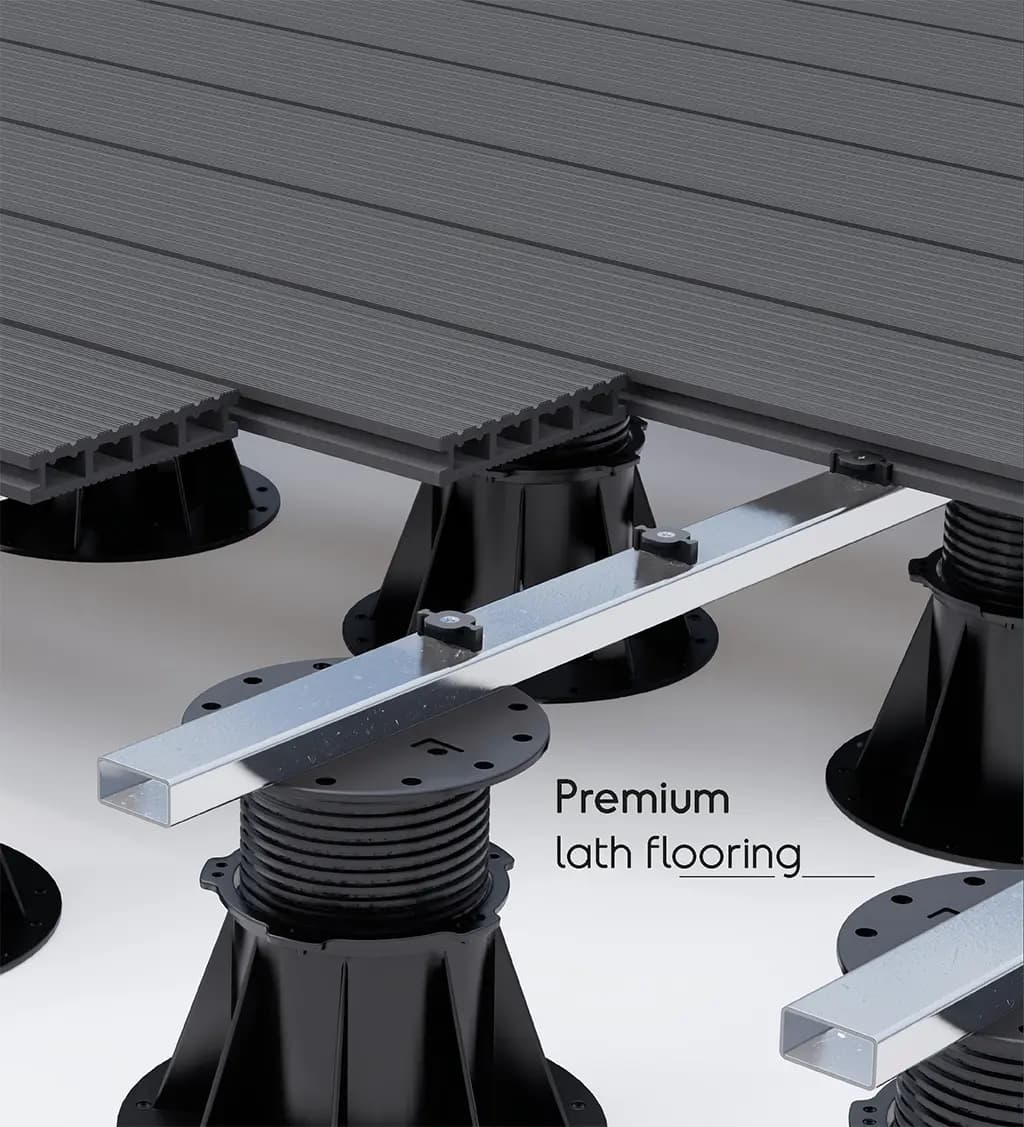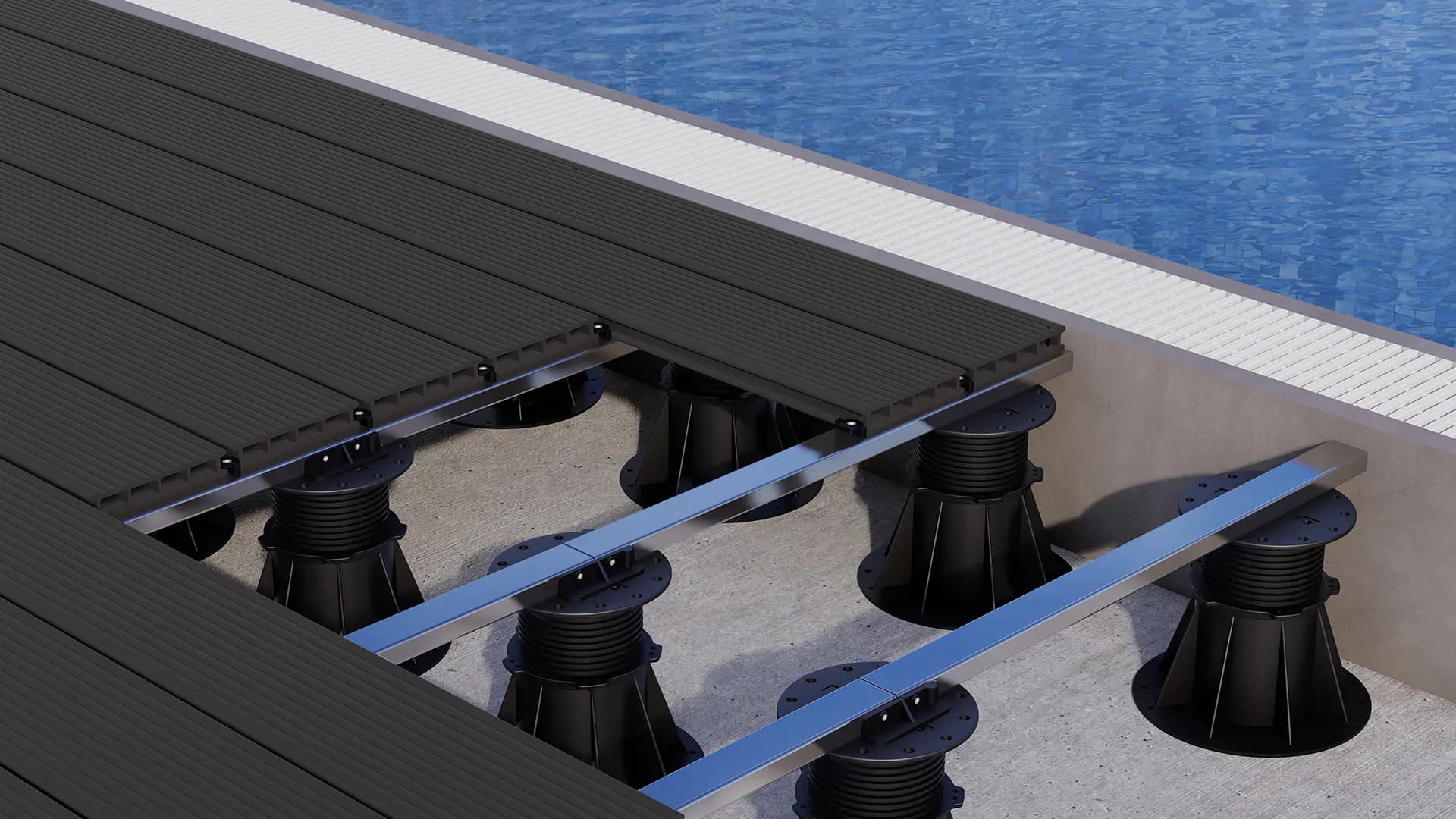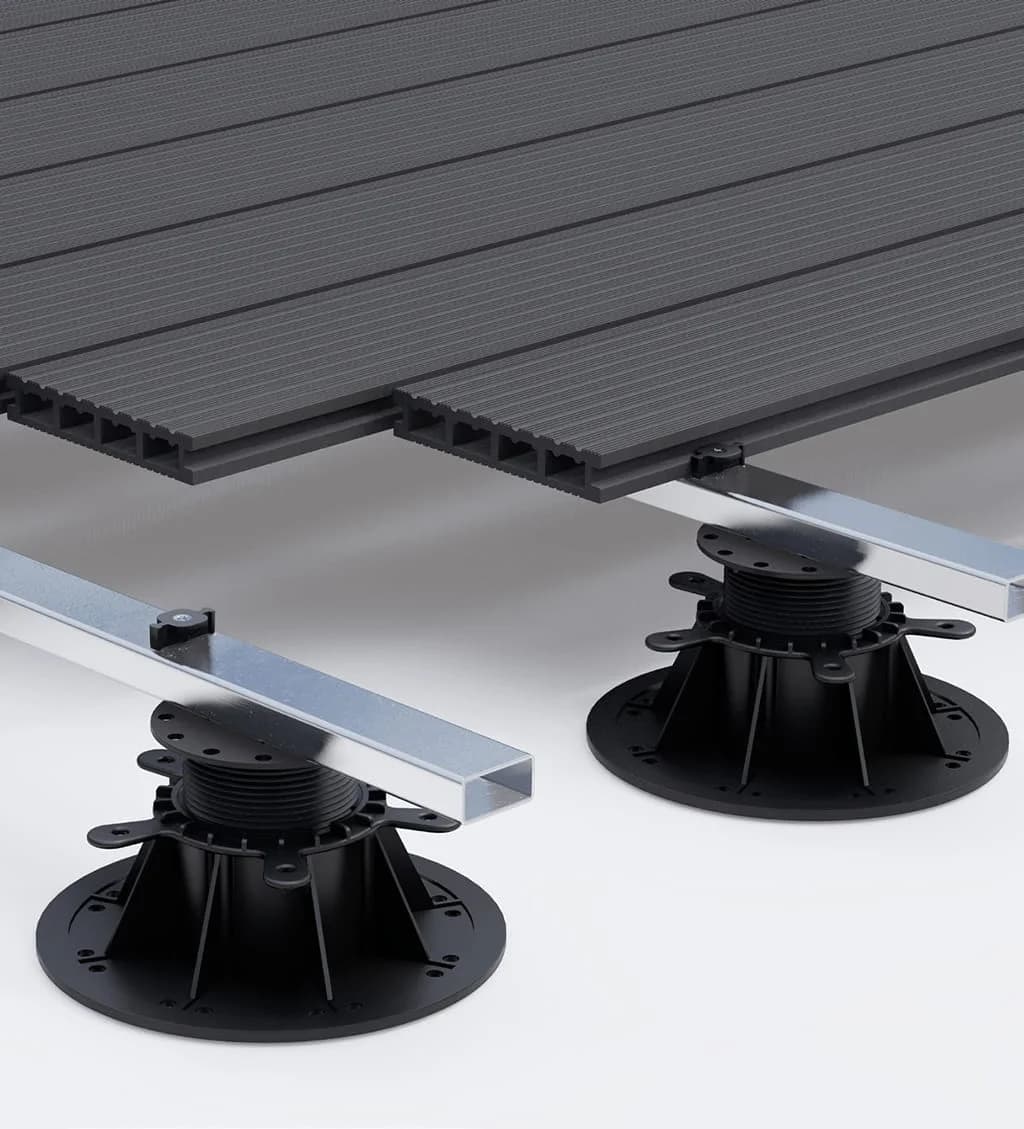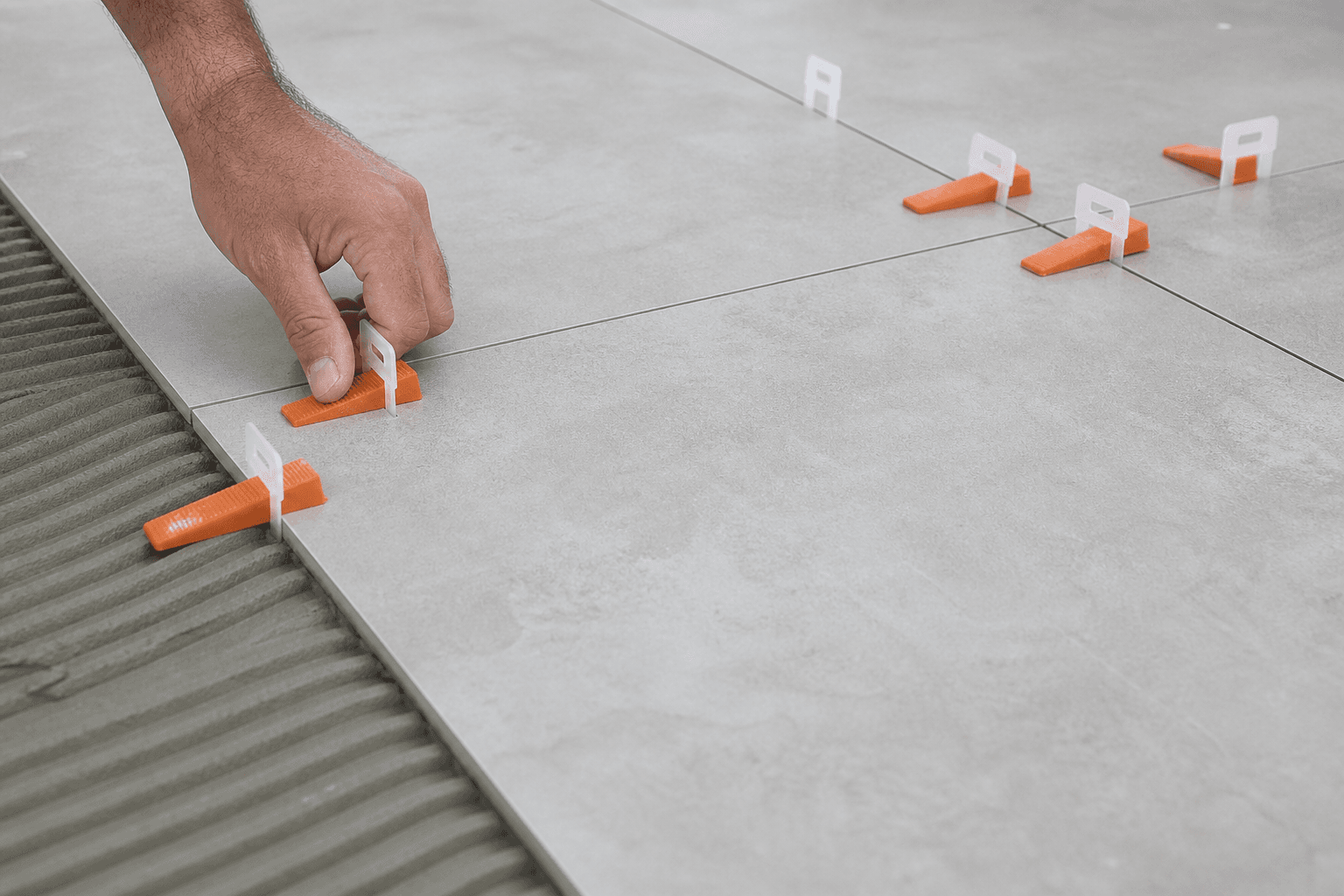
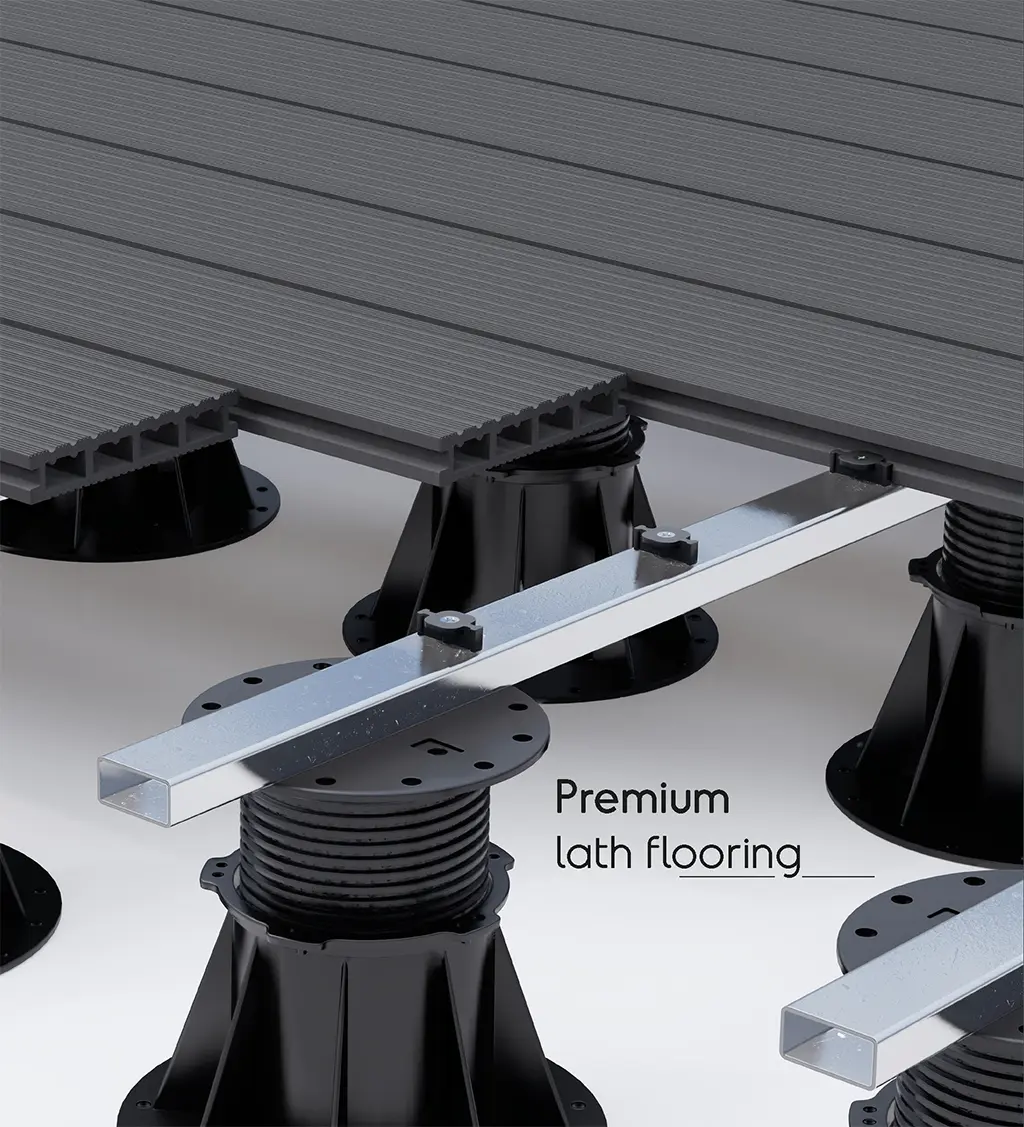
The board sits with a clip on a line pressed in Çorlu. T-DCN is not a tile stick. The batten direction sets the board direction. When one board comes off, the field stays down.
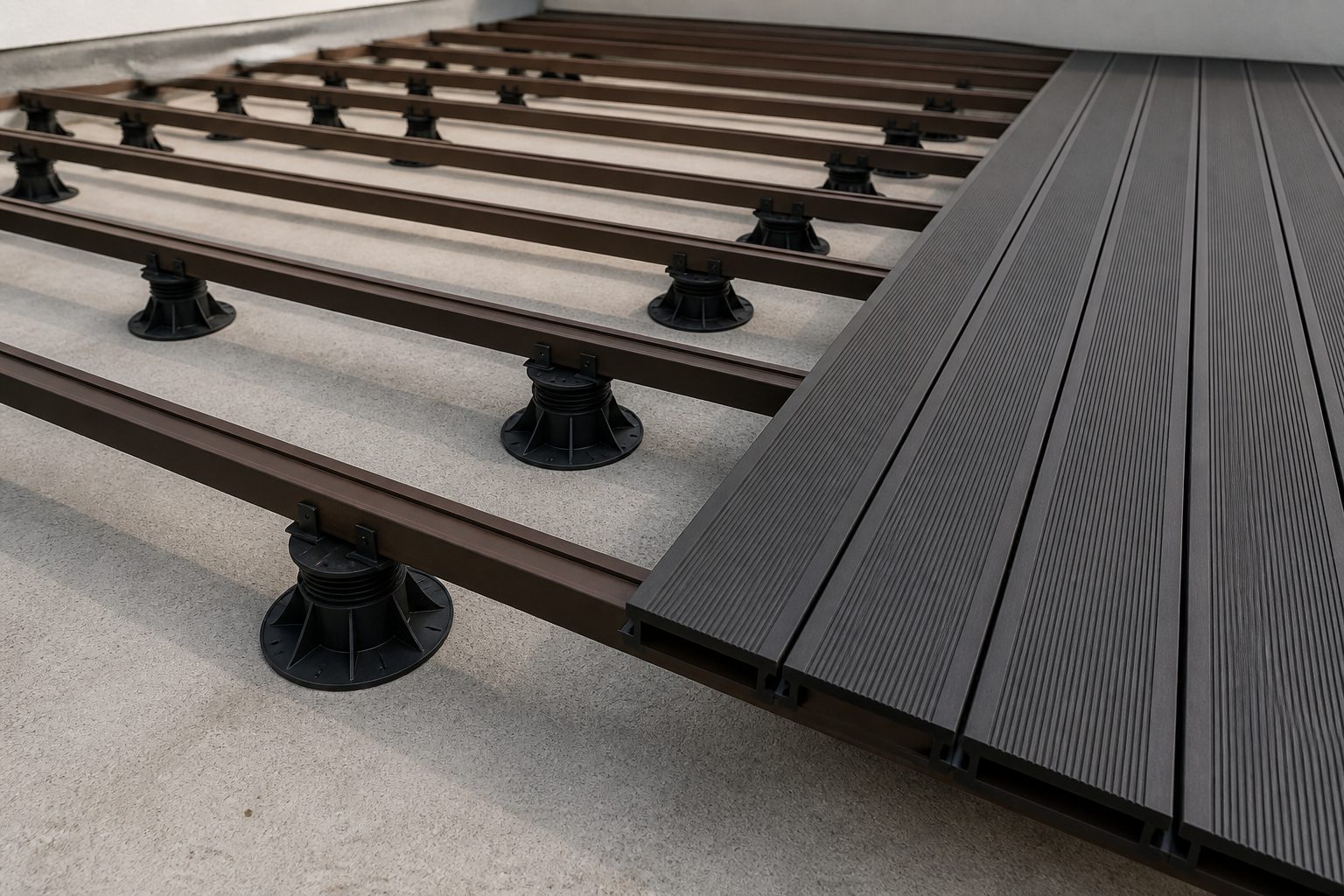
What the board is mixed from belongs to another piece and is not copied here. The question here is how the board is locked to the pedestal. The lock is not a screw driven into the face. The lock is the clip that holds the tooth at the edge of the board. The clip is not seen. What is seen is the boards standing next to each other. That standing is not made with adhesive. Adhesive forces the whole field to come up when one board has to change. The clip opens the edge of one board and leaves the neighbour in place. That split is the site reason for a deck. The reason is not the name of a colour. The reason is a board that comes off and sits back.
T-DCN is its own line
The clip is not folded into the body of the pedestal. The body carries the batten line. The clip ties the board to that line. Writing the two as one item yields either a board without clips or clips without a board. The count comes from the board length and the number of lines. Counting clips from the square metres leaves a tooth short at the corner. A short tooth leaves the end of the board free. A free end sounds when it is walked. The sound is not a colour fading. The sound is a line that was not written. T-DCN also does not do the work of the stick that sits in the middle of a tile joint. The stick holds a gap. The clip holds an edge. Taking the edge for a gap leans the board on the stick and leaves the tooth empty.
The batten direction chooses the board
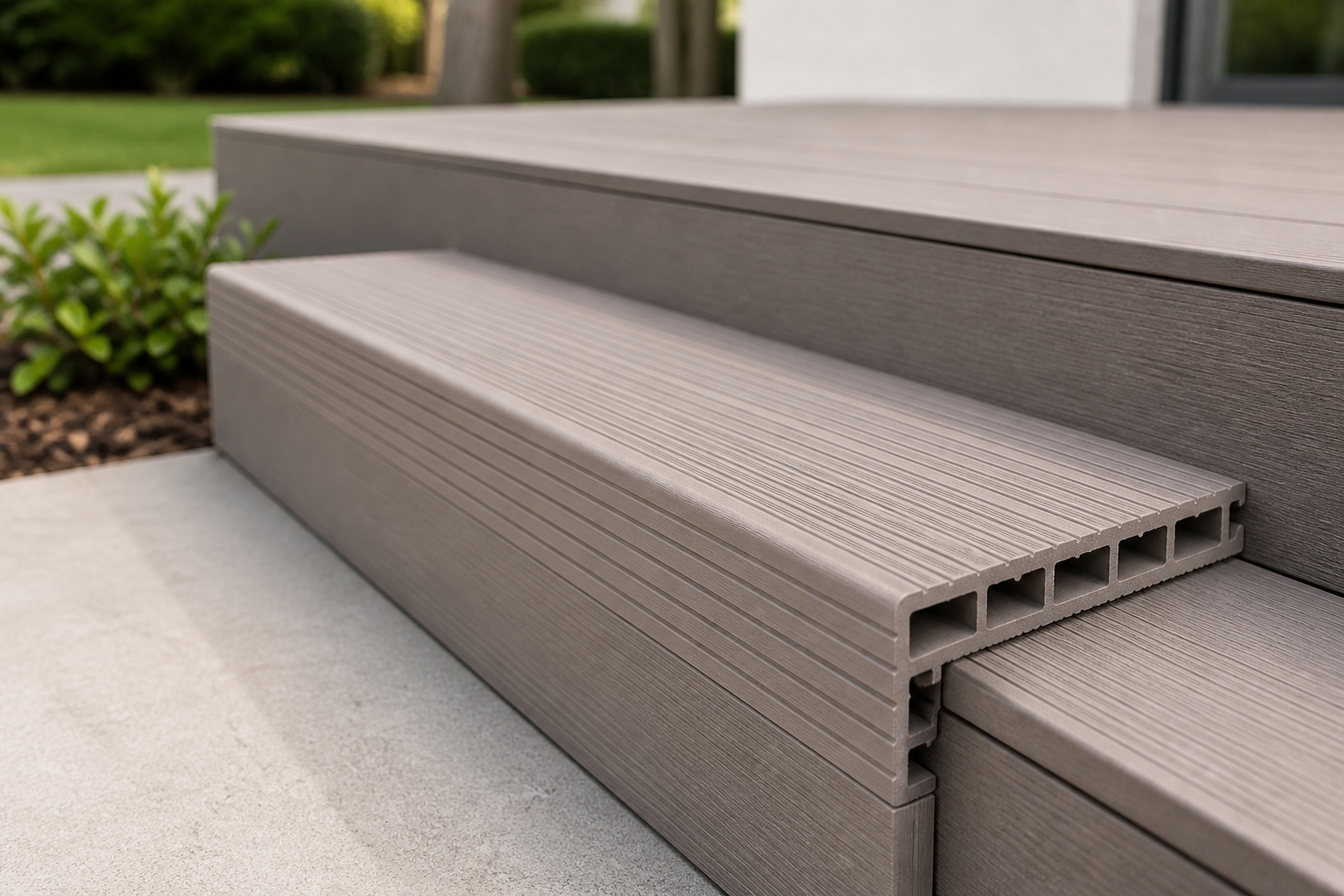
The board comes down across the batten. Whichever way the batten runs, the board runs across it. The direction is not changed after the first board is set on site. Changing it wastes the cut ends and the return at the corner. The direction is read from the door threshold and from the long side of the parapet. The threshold is where the end of a board meets the eye. The long side is where a batten can run without a break. If the two readings disagree, the threshold is discussed first. The batten sits on the head of the pedestal. If the head is written without knowing the batten direction, the grid is turned afterwards. A turned grid lays the clip teeth out again. Laying them out again changes the clip count of the first order. When the count changes, the box comes up short.
The fastener is not on the face
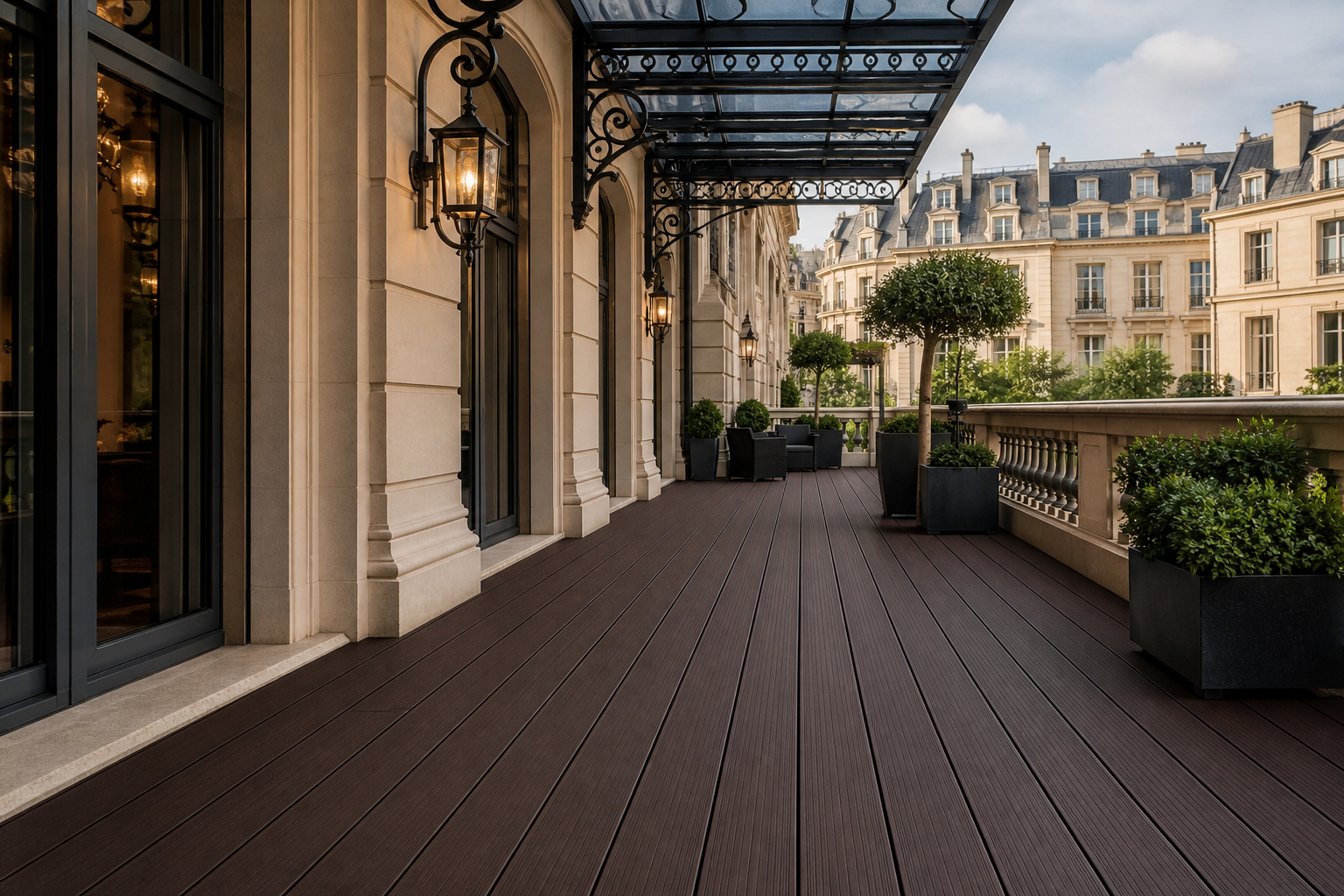
Leaving a screw head on the face drills the board like a cladding board. A drilled board takes water in through the hole and ends the work of the clip. Because the Tokoz clip holds from the edge, the face is not drilled. A face that is not drilled also does not ask for a paint calendar. Not asking is not a claim that the board will never be looked after. The claim is that looking after the fastener is not sanding the face. Looking after it is opening the clip and taking the board out. The same profile comes in place of the board that came out. If the profile changes, the tooth does not fit. A tooth that does not fit holds the new board by half. A board held by half sounds again. This time the sound is not from the colour. It is from the wrong profile.
One board does not lift the field
A damaged board comes out without taking the screws of its neighbours. To take it out the clip is loosened, the board slides off the edge, and the new one sits on the same tooth. The sitting is the same in the middle of the field and at the edge. Being in the middle does not require the whole row to come up. The row opens one board at a time because of the clip. The batten under the opened board stays in place. If the batten comes up, the direction is taken as changed and the neighbouring boards empty too. An emptied neighbour takes the job out of changing one board. So the batten line is not touched. What is touched is only the clip and the board. The same order holds at a pool edge. The edge does not change the recipe. What changes is the line where the board ends.
The spacing is not invented
The distance between battens is not written as a number on this page. The number comes from the board’s own span note and from the layout. If there is no note, the number is not invented. An invented number leaves the clip tooth either too tight or too sparse. A tight tooth bows the board. A sparse tooth lets the middle flex. A flexing middle knocks the hidden fastener through to the face. The knock is taken for a fault of the head. The fault is a distance that was not written. If a distance is to be written, the board maker’s note is added to the sheet. The smallest pedestal spacing in the catalogue is not put in place of a note that was not added. Pedestal spacing does not stand in for batten spacing. The two are read apart. A sheet that does not read them apart comes back.
The pedestal is not the board’s kilogram
A point load is not written on the board. Whoever writes it is taking the board for the pedestal. The pedestal carries the batten. The batten carries the clip. The clip carries the board. In this chain the board’s own declaration is not a copy of the pedestal’s declaration. Copying puts the same number on the order twice and makes the batten line forgotten. A forgotten line tries to sit the board straight on the head. A board that sits straight does not use the tooth of the clip. An unused tooth ignores the hidden fastener. A fastener that is ignored also ignores the taking-off that this piece is about. If nothing comes off, the field is stuck down. A stuck field is not a deck line.
The sheet writes the direction and the tooth
On the sheet the batten direction stands as an arrow. Without an arrow the board is cut two ways and the waste grows. The clip count comes from the number of lines the arrow crosses. Without that number the count is not written. A count that is written is a guess. A guess leaves a tooth short at the corner. The name of the profile is on the sheet too. A profile whose name has changed does not sit on the old tooth. The sheet that goes to Çorlu is one whose direction is clear, whose clips are counted and whose profile is named. A colour name does not stand in for those three. Colour is the face of the board. The face does not carry the order of taking a board off. What carries the order is the arrow, the count and the profile. When those three are complete, one board comes out, the new one sits, and the field stays in place.