Composite deck is the board pressed in Çorlu: pine fibre with dense PE or PVC. Water uptake stays under 0.15, so the board sinks instead of riding on water. Clips hold each board.
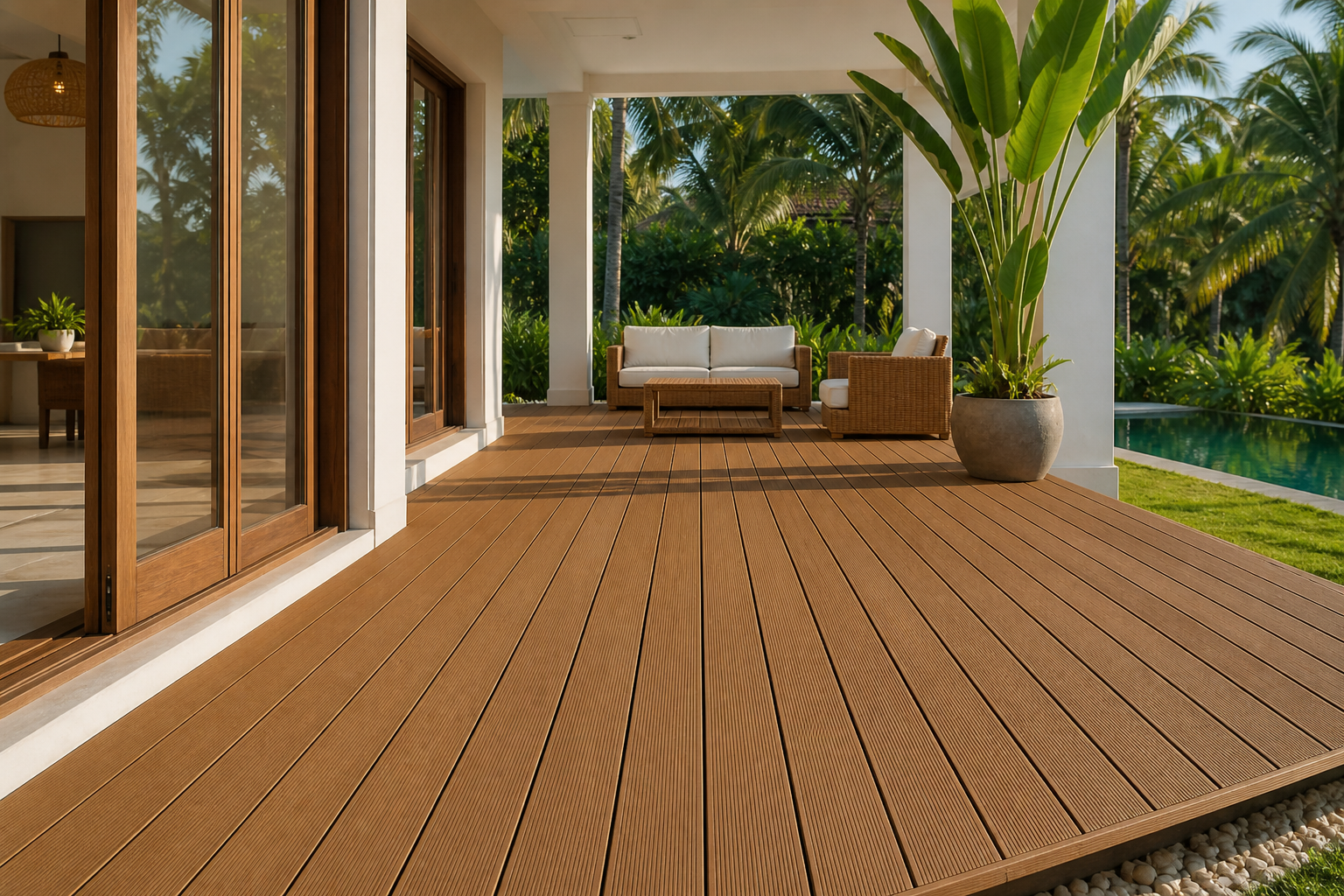
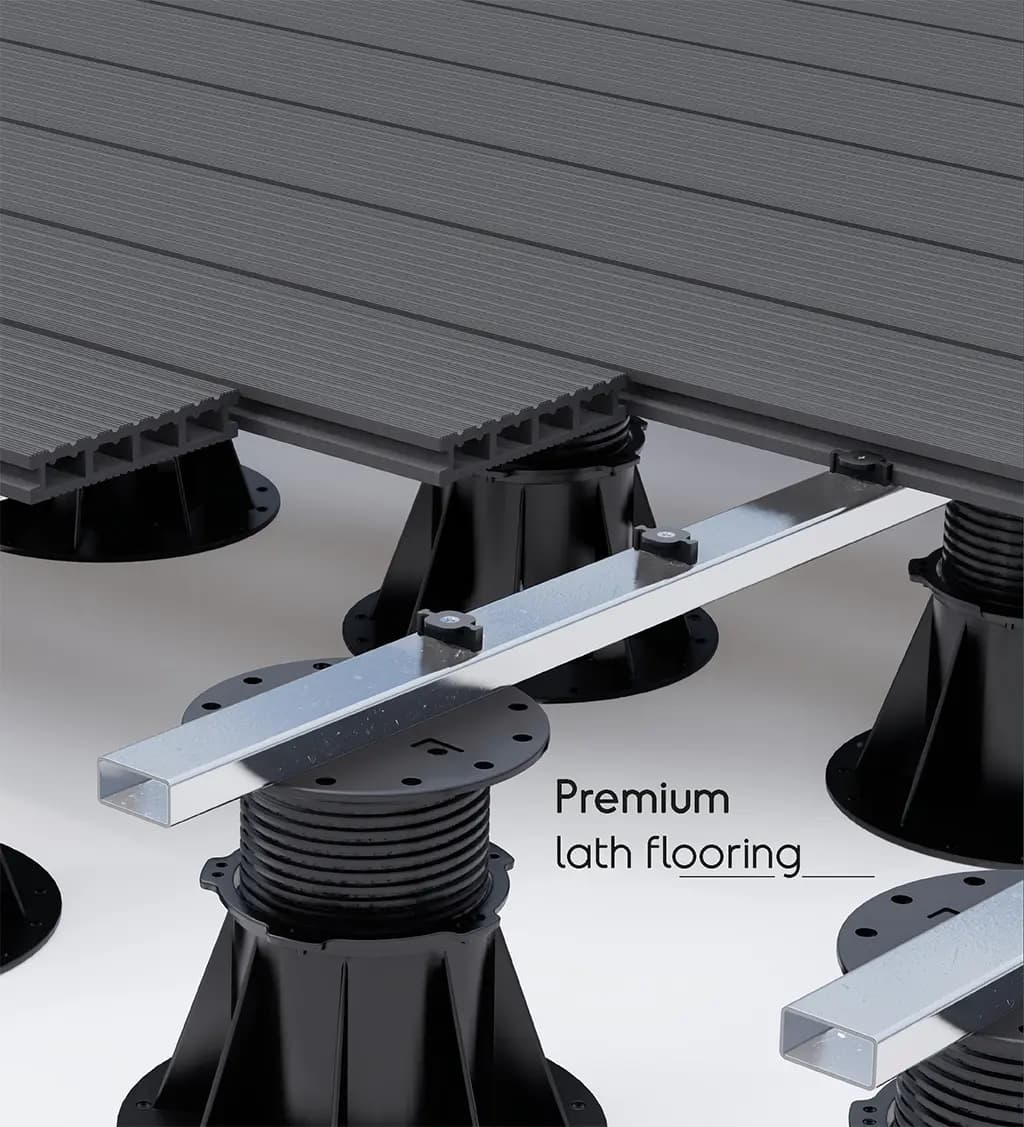
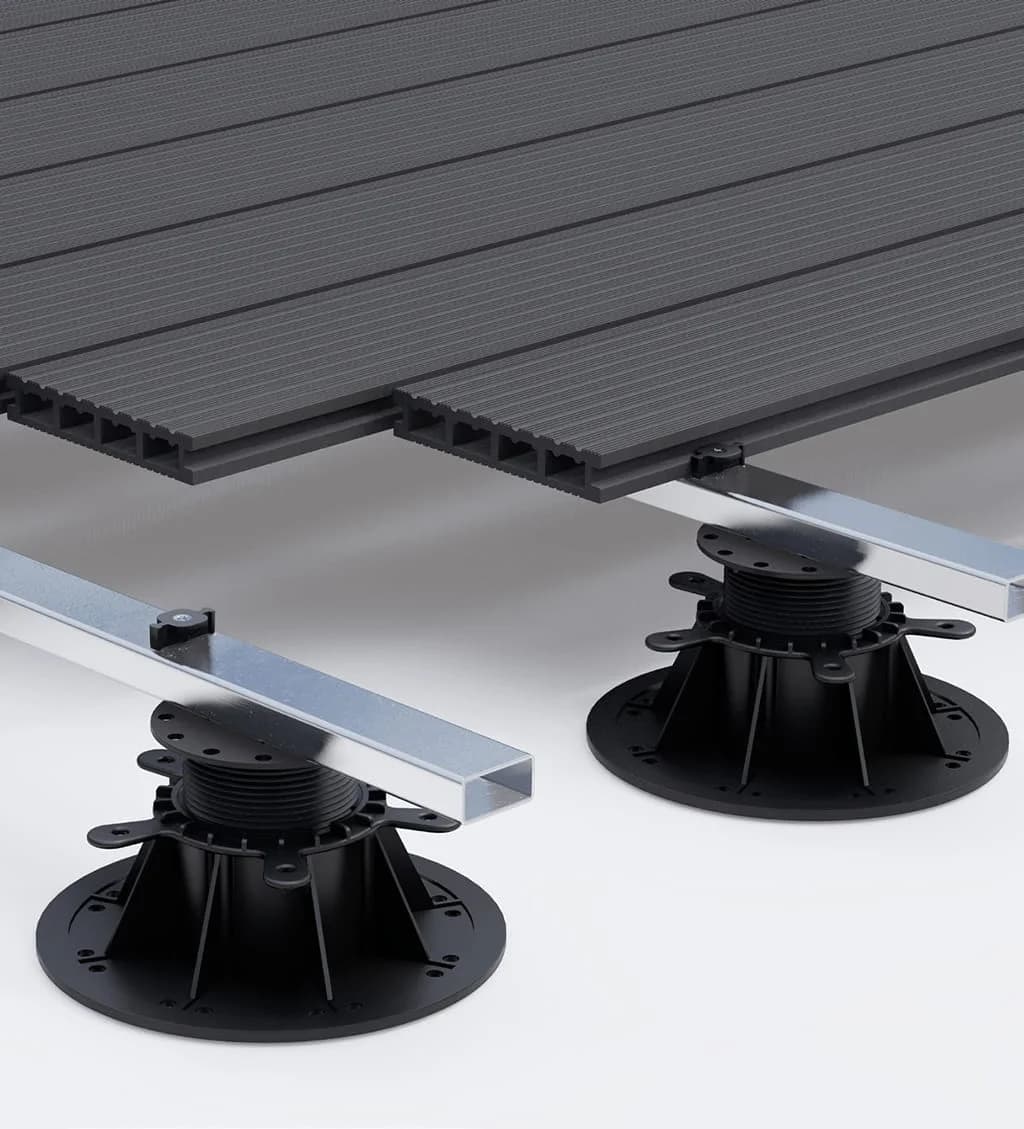
Composite deck on this page does not narrate a screw. What it narrates is the board itself. The board is pine fibre brought together with high-density polyethylene or with PVC in one profile. Polyethylene and PVC are two binder choices. They are not two load classes. The fibre gives the board its wood character. The polymer holds the fibre together. The shape seen at a cut end is not the solid body of a timber balk. The shape is a formed profile. This text does not invent a count of inner cells. Teak colour and anthracite colour are not two recipes. They are two faces of the same fibre-and-polymer idea. The warm face does not ask to imitate a balk that is oiled every year. Splinters drop away because the fibre stays bound inside the polymer. Rot is the result one expects when water cannot travel freely into the fibre. That result is not a mileage claim. The result is a statement of what the board is made of. A rail showing in a photograph is not a reason for the sentence to slide onto the screw of the rail. The sentence stays on the board. When the board is ordered, the name of the profile, the name of the colour and the area are written together. Colour does not change the recipe. The name of the profile does not turn pine fibre into another plant. Another plant is not on this page. The page writes no mix other than pine fibre with dense PE or PVC. The outside of the mix is a grooved walking face. The groove does not replace the recipe. The groove is the line of the face. The line shows the same material on a DDC field and at a teak doorway.
Uptake under 0.15 is why the board sinks
Water uptake is held under 0.15. That limit is there so the board does not swell like a sponge and push the next board. Put the board in water and it does not sit on the surface like a little boat. It sinks. Sinking is not part of a floor's name. Sinking means the material does not behave like a light offcut of timber. Solid pine drinks water and moves. This recipe stays under the 0.15 limit, so that movement is not the subject of upkeep. The figure 0.15 is not inflated with a percent sign. The figure is the upper bound of uptake. This text does not write how many days a test ran. Rain on the face is not the same thing as water taken into the mass. Water standing on a roof is a drainage question. This page does not turn that question into litres. The board itself does not become a sponge. Once uptake climbs past that bound, the board leans on its neighbour and the groove line breaks. Staying under the limit is how the line stays in place. A line that stays in place does not say the board changes length when it is wet. Length is the work of the press and the mould. Water does not rewrite the length. Not rewriting it does not mean the board turns into a buoy at sea either. It means the fibre stays closed inside the polymer. Closed fibre is the same recipe when you look at a cut end. The cut end is not left so that it can store water like a tank. Stored water is not the subject of the uptake limit. Uptake is a weighing of the mass. The weighing is spoken of on this page as under 0.15 and is not converted into another unit.
EN 350-1 writes the top durability class on this recipe
EN 350-1 writes the highest durability class on the recipe of this board. The class is the name of a stand against biological decay. The class is not a slip grade. The class is not a weight rating. A can of paint does not earn the class. The class belongs to the recipe in which fibre and polymer stand together. The calendar of oil and sanding that solid timber runs every year is not put in place of this board's class. The calendar is a habit. The class is a sentence of a standard. This text does not add a count of years, a warranty term or a test cycle to the class. An added number would be a claim the standard does not make. The claim is not split between the teak face and the anthracite face. Both faces carry the same class because the recipe is the same. Colour can change while the recipe does not. When colour changes, the class is not counted as changed. It is not counted so because the class hangs on the recipe of the material, not on how dark the face is. A board that comes from the recipe is the same class when it is cut. A cut end does not open a new class. Opening a new class would split the standard in two. This page does not split the standard in two. The page leaves the sentence of the highest durability class on the recipe. Under that sentence one does not look for an R value, a pendulum number or a vehicle load. If someone looks, the looker is on the page of another document. This page does not imitate that document. Imitation shifts the name of the class. The name that does not shift is EN 350-1 and the highest durability class.
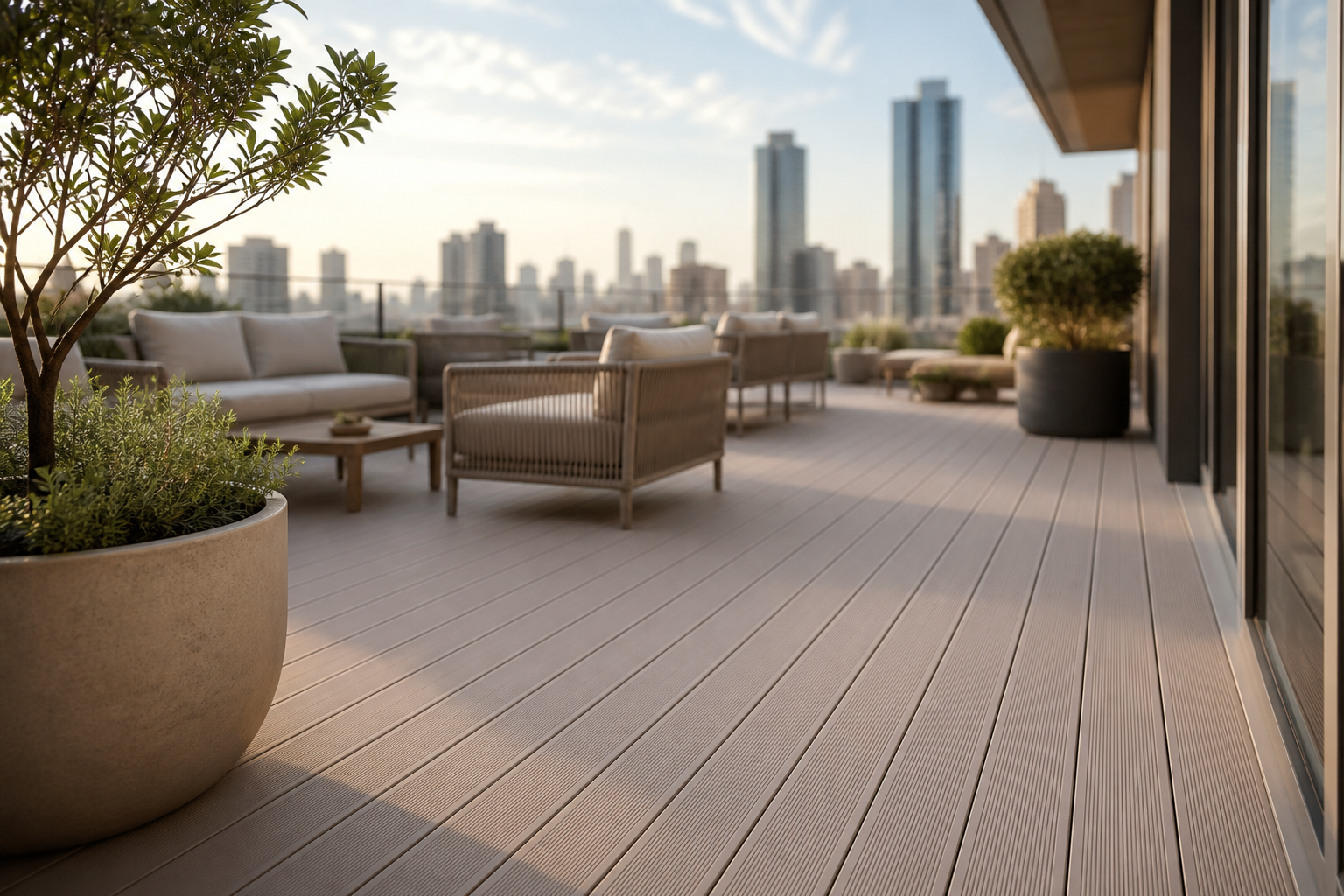
Wet face and dry face grow no slick film
The face of the board does not grow a slick film when it is wet. It does not grow one when it is dry either. A slick film is a sticky layer felt under a shoe. This sentence is not a slip class. An R letter, a pendulum value or a barefoot note is not in this text. Their absence does not say the face will grip in every condition. Their absence limits the claim to the lack of that film. Leafy mud and soap are dirt. Dirt is washed off. Under the washed face the recipe is the same. A paint film can be the thing that turns slick. A paint film is not required on this face. The face is the board's own material. The grooves are the line seen in the photograph. The line is not offered as a measured slip device. The line is the pattern of the face. Dry dust does not produce a film either. Dust is wiped, and the face is the same again. The same face holds for teak colour and for anthracite colour. Colour does not change the film. What changes a film is a layer spread on later. A layer spread on later is not part of this recipe. The recipe says the film does not form wet or dry. That it does not form is not a chart of pool chemistry. The chart is not set down here. The claim that stays is that a sticky slickness under the shoe, where the shoe meets the board, does not come out of the recipe. What does not come out of the recipe is not invented with a brush after rain. The brush takes dirt. The brush does not invent a new face.
Paint is not a yearly calendar
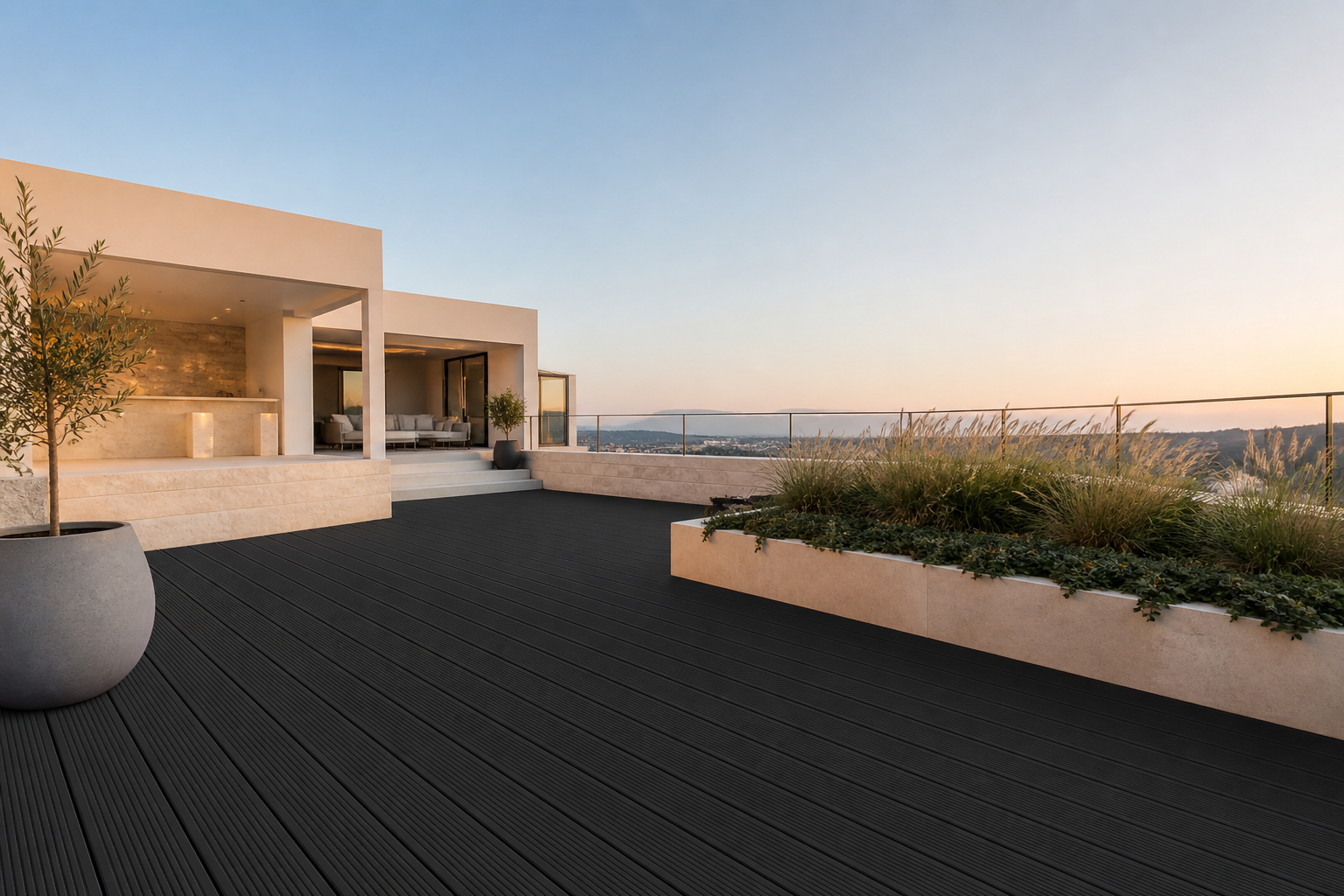
Paint is optional. Optional does not mean forbidden. Optional means the board does not need that coat in order to remain a board. Colour is the face that is ordered. The teak face and the anthracite face are two choices given at the works. The choice is not a coat renewed every spring. If a job asks for paint, a coat may be spread. Spreading a coat does not mean the recipe depends on paint. A recipe that does not depend on it carries no yearly paint calendar. The habit of sanding back to solid timber is not an order of this page. If it were an order, the recipe would be a shell stripped every season. It is not a shell. The face is the colour chosen on the order. This text does not invent whether the colour sits through the whole mass or in a cap. An invented depth would be a section the photograph does not show. The photograph shows the face. The face is warm at a teak doorway and dark on a roof terrace. Both stand without a paint calendar. What the sun does across years is not a number in this paragraph. If it were a number, a second claim would be added beside the sentence of the standard. The second claim is not written. What is written is that paint is not a condition of upkeep. What is not a condition is not put on a quotation line as a required can. If the can is put there, the board is read as if it had stopped being the same board without paint. That reading is wrong. The board is pine fibre and dense polymer even without the can. The polymer does not depend on a yearly visit of the brush.
One board changes without stripping the field
One board comes out. Its neighbours stay. The field is not stripped to reach a stained or broken board. The incoming board matches that profile and that thickness. What stays laid out is a sequence of separate boards, not one fused panel. The mark of a furniture leg stays on one board. The mark does not travel to the neighbour. The change is a decision the length of a board. Cutting the neighbour to blend it is not needed unless the end is already an end. When the new board is in, the field looks continuous again. The DDC frame shows that continuity. The groove line still runs the same way where the board came out. If the direction breaks, the new board was put in backwards. A board put in backwards breaks the run even if the profile is right. The run depends on one board being able to leave through the opening the clip leaves. If there is no opening, the change turns into taking up half the field. Taking up half is not the work this recipe promises. The work it promises is one board. One board ties the line at a doorway and the dark face on a roof to the same rule. The rule does not change when the colour changes. Taking a board out of an anthracite field is the same order as taking one out of a teak field. The order is not to shift the neighbours. A shifted neighbour makes a new stain. To avoid making a stain, only the bad board comes up. The board that came up is set aside. The new board comes down on the same line. The line is the groove read by eye. If the line holds, the change is finished.
The hold is a clip, not an adhesive
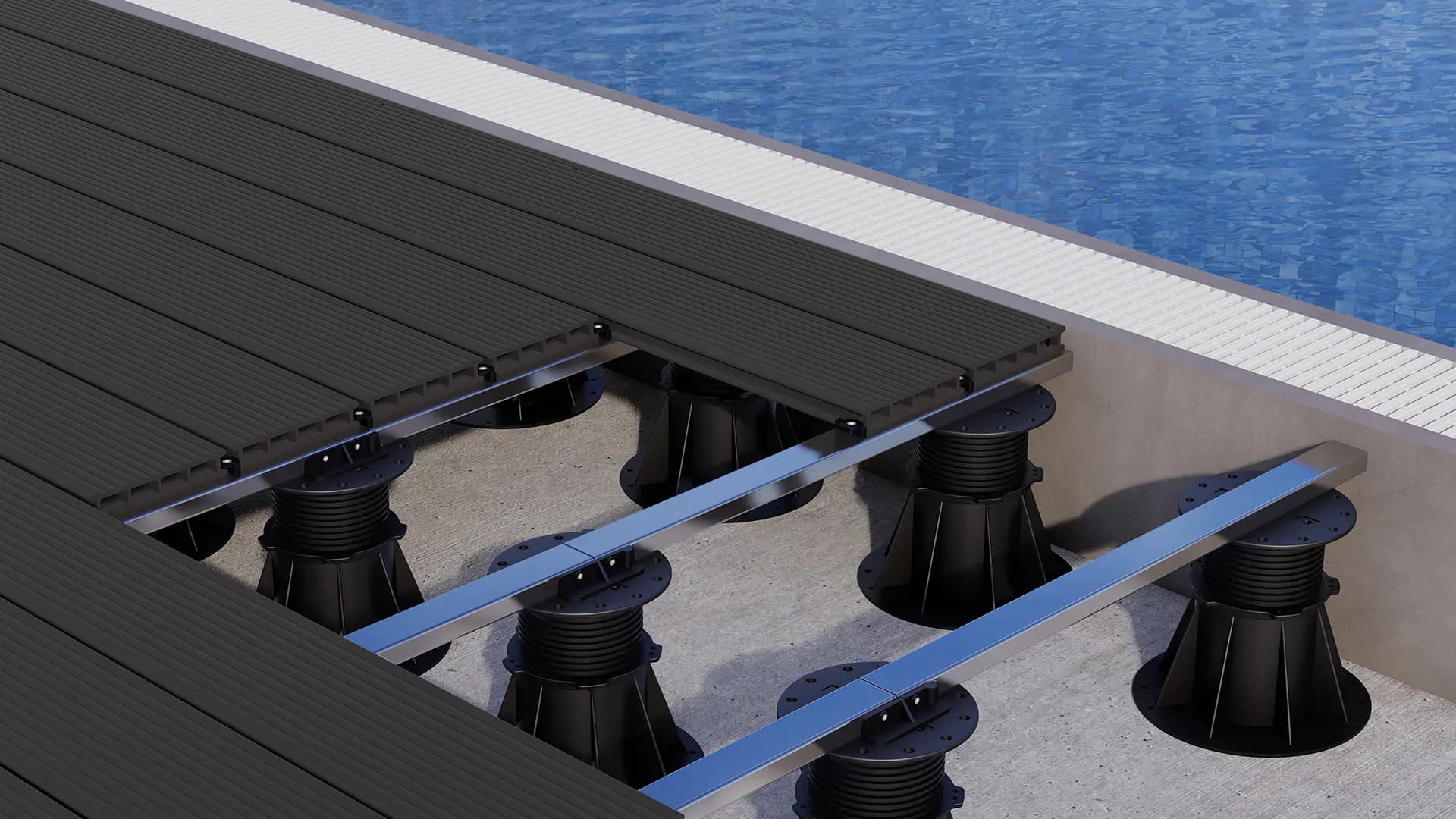
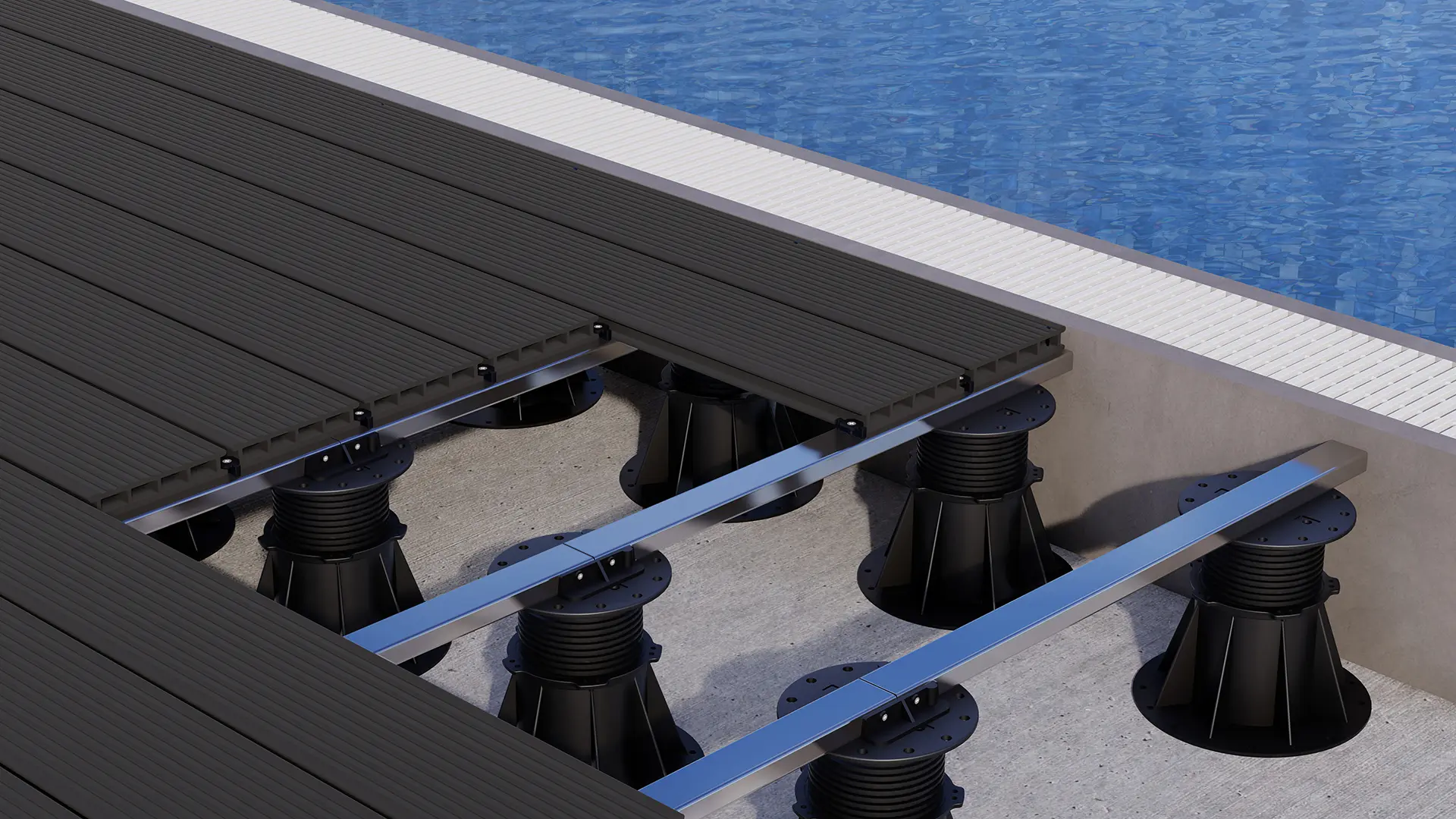
The board is held with a clip. It is not held with adhesive. The clip catches the edge of the board and lets that board come out. Adhesive sticks the board down on the rail. A stuck board does not come out alone. Taking it out turns into scraping the whole run. The clip is the fastener named for this board. This text does not invent a clip spacing. It does not invent a screw diameter. The fastener line stands apart from any screw under the rail. The sentence stays on the clip. Adhesive spread on a butt joint also locks boards into a chain. The chain ends the change of one board. The only grip that is left is the clip. A missing clip is swapped for a new one. Adhesive is not spread over the new clip to be sure. Adhesive that is spread cancels the work of the clip. The cancelled work does not change the recipe of the board, but it changes how the field comes apart. When that changes, the DDC continuity turns into a sheet. A sheet may keep the groove line and still refuse to give up one board. A face that will not give up one board is not the hold this page describes. The hold is the small catch seen at the edge. The catch is not split into two measures, hidden or seen. The split would be invented. The right word is that the catch is a clip. The clip is not what binds the polymer to the pine fibre. That bind is in the making. The clip binds the finished board in place and releases. A bind that does not release is the work of adhesive. The work of adhesive is not written into this recipe.
At a pool edge the board ends as the same board
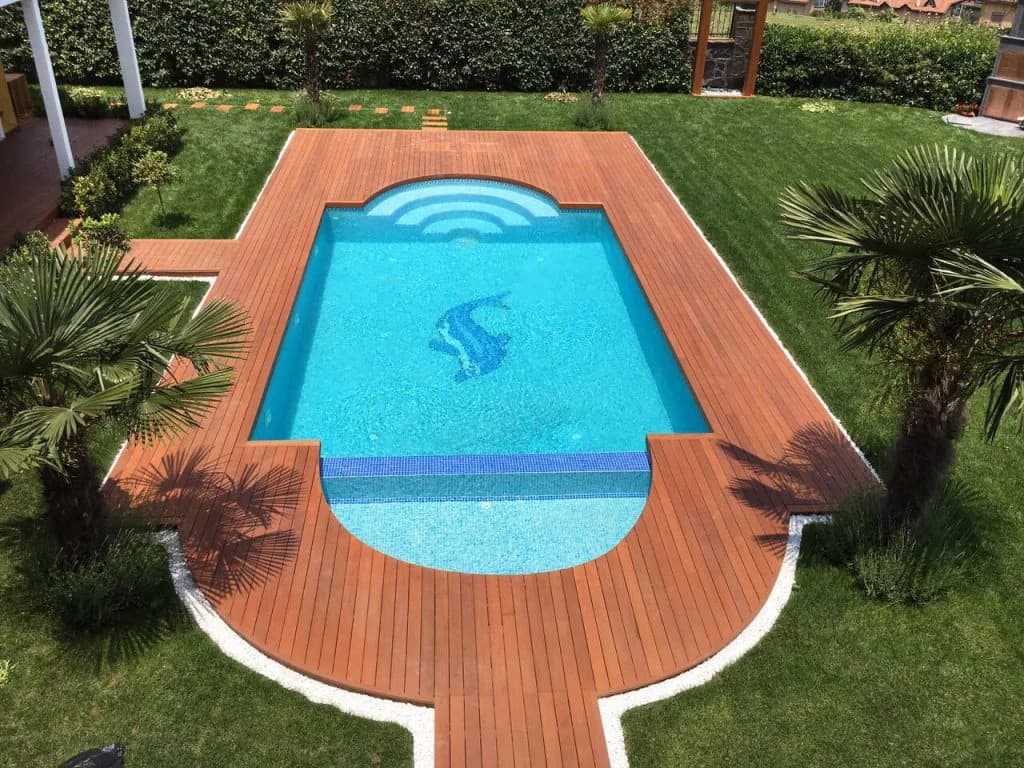
A place where a board ends can be a pool edge. The ending does not change the recipe of the board. Pine fibre and dense PE or PVC are the same mix beside the water. Uptake is still under 0.15. The sentence of EN 350-1 still stands at the edge. The frame shows the boards stopping before the pool coping. The rails in the frame look galvanised. This text adds no coating figure to that galvanising. An added number would be a specification beyond the photograph. The specification is not written. Black supports appear in the frame and are not the subject of this text. The subject is that the board ends there. A splash of chlorine is a place, not a new uptake figure. An hour of chemical resistance is not in this paragraph. Its absence does not mean the board cannot stand there. It means a new test is not invented. The board at the edge is held by a clip too. One board changes there as well, without stripping the field. The change does not disturb the measure of the pool coping. The measure is the line where the board ends. The line does not ask for a paint calendar. Not asking cuts the belief that the edge is another material. When the belief is cut, the order stays one recipe. The one recipe is profile, colour, area and clips. No price sits on this line. No rainfall sum sits here. The board is made in Çorlu. The place of making does not open a second mix at the pool edge. The mix is one. A mix that is one sinks, grows no film and gives up one board, wherever it ends.